
Last updated September 20, 2026
Free on-site gate assessment - hinges, posts, and your LiftMaster or Nice gate operator checked before anything is quoted
The assessment is free and the quote is the invoice.
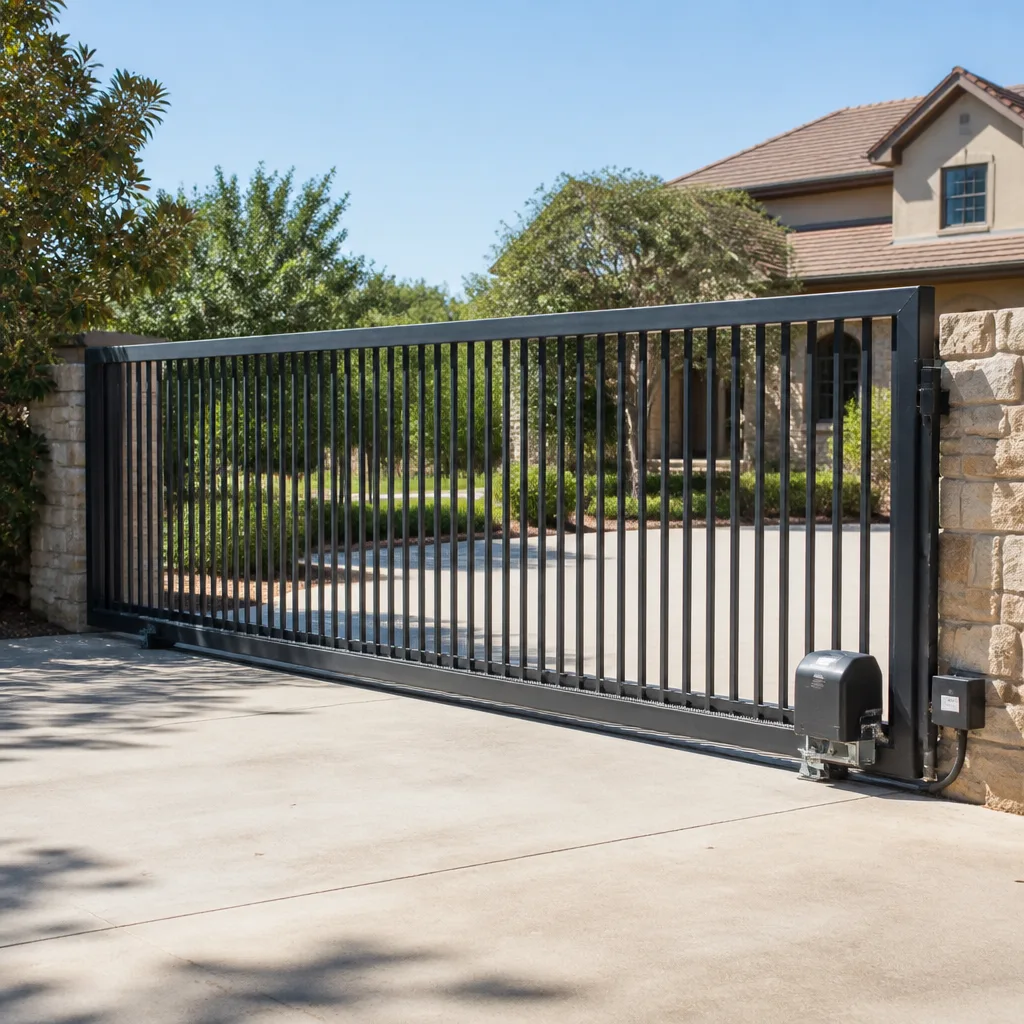
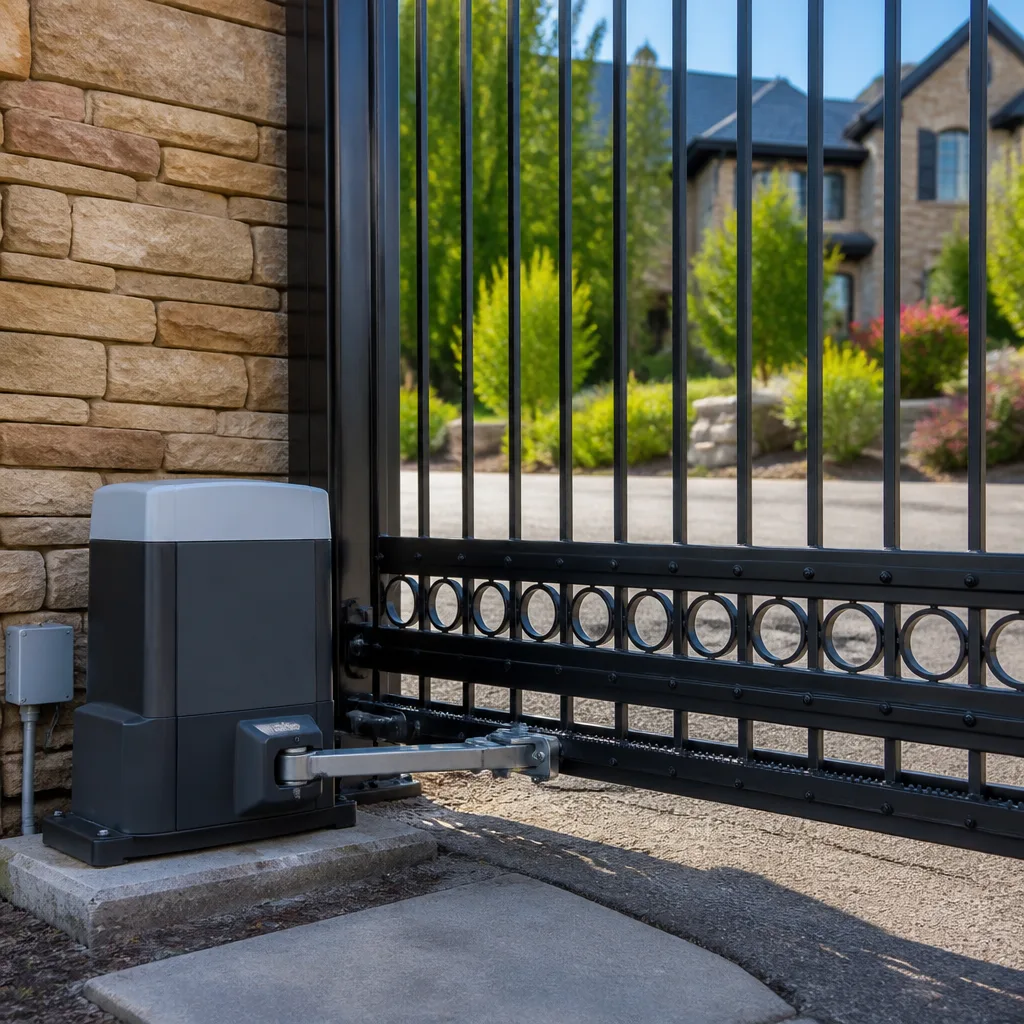
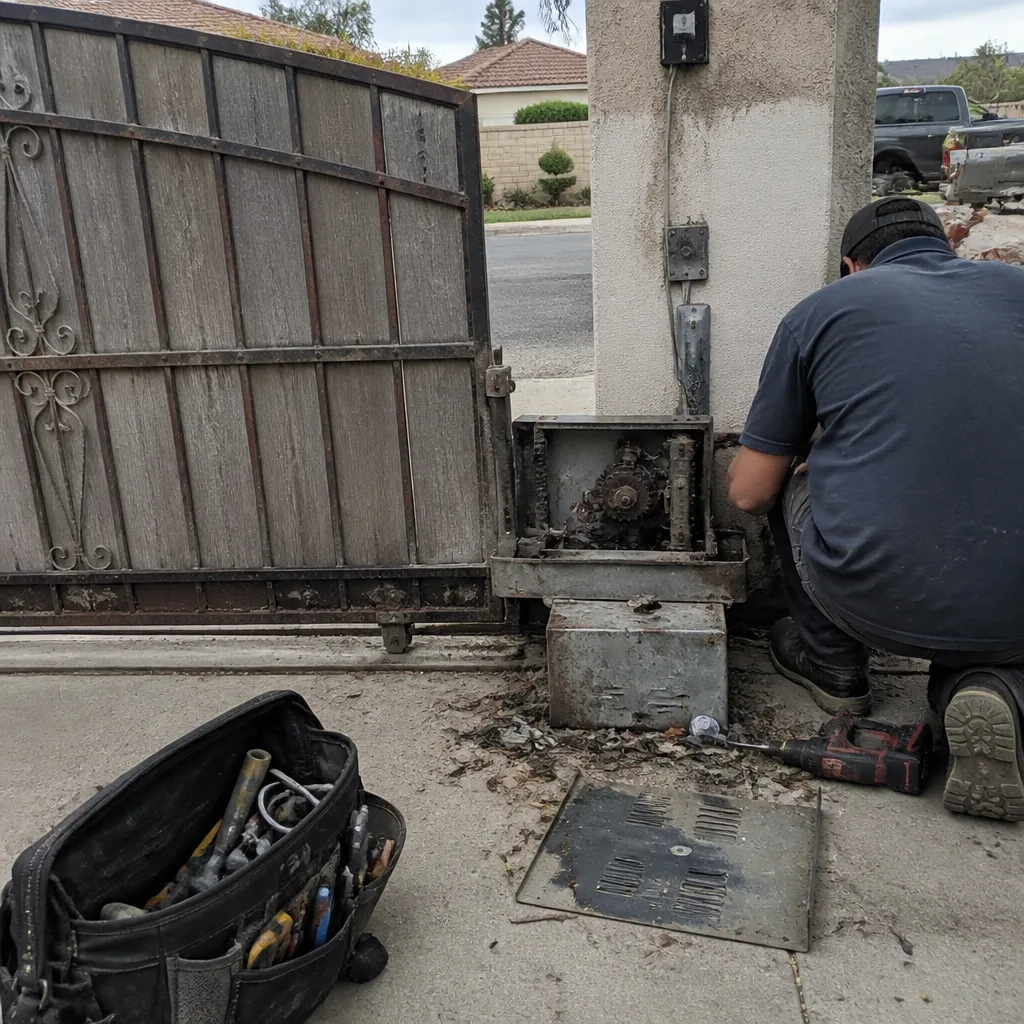 Before
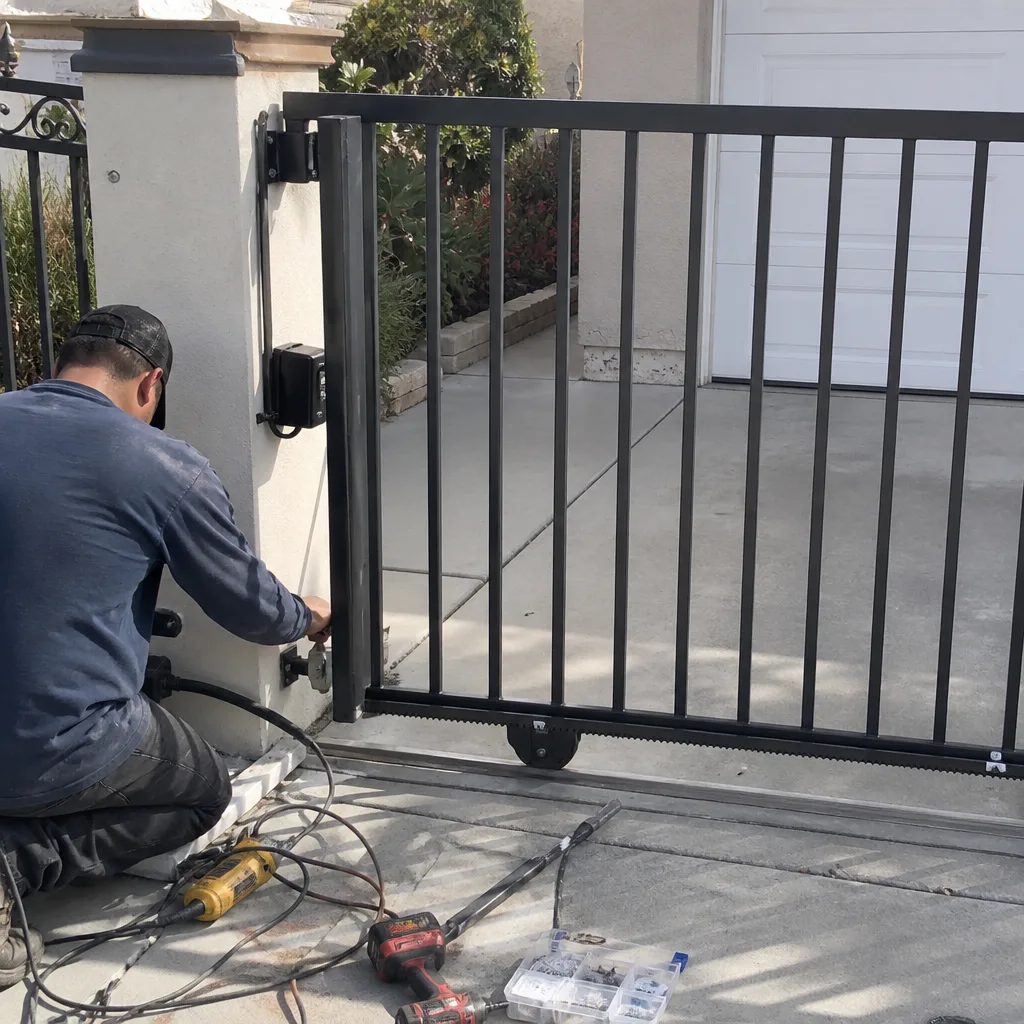 After
After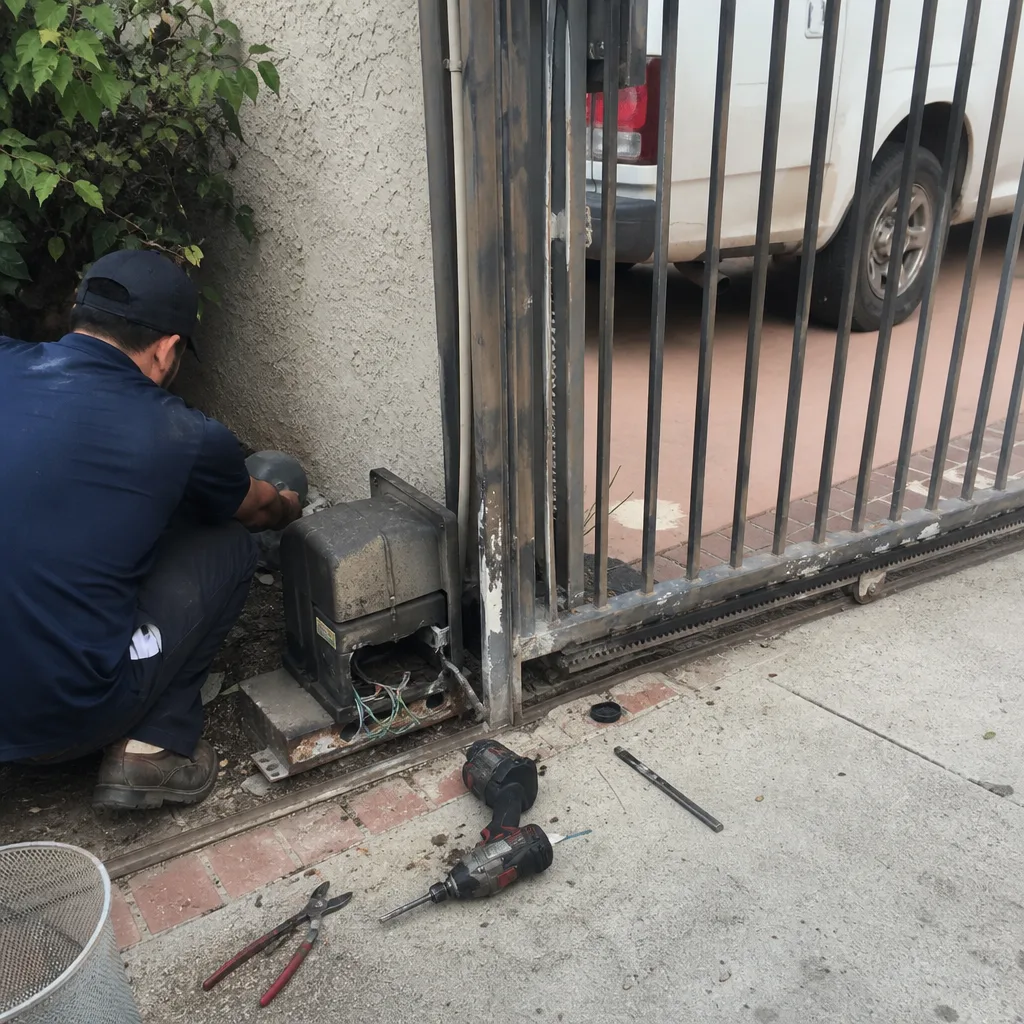 Before
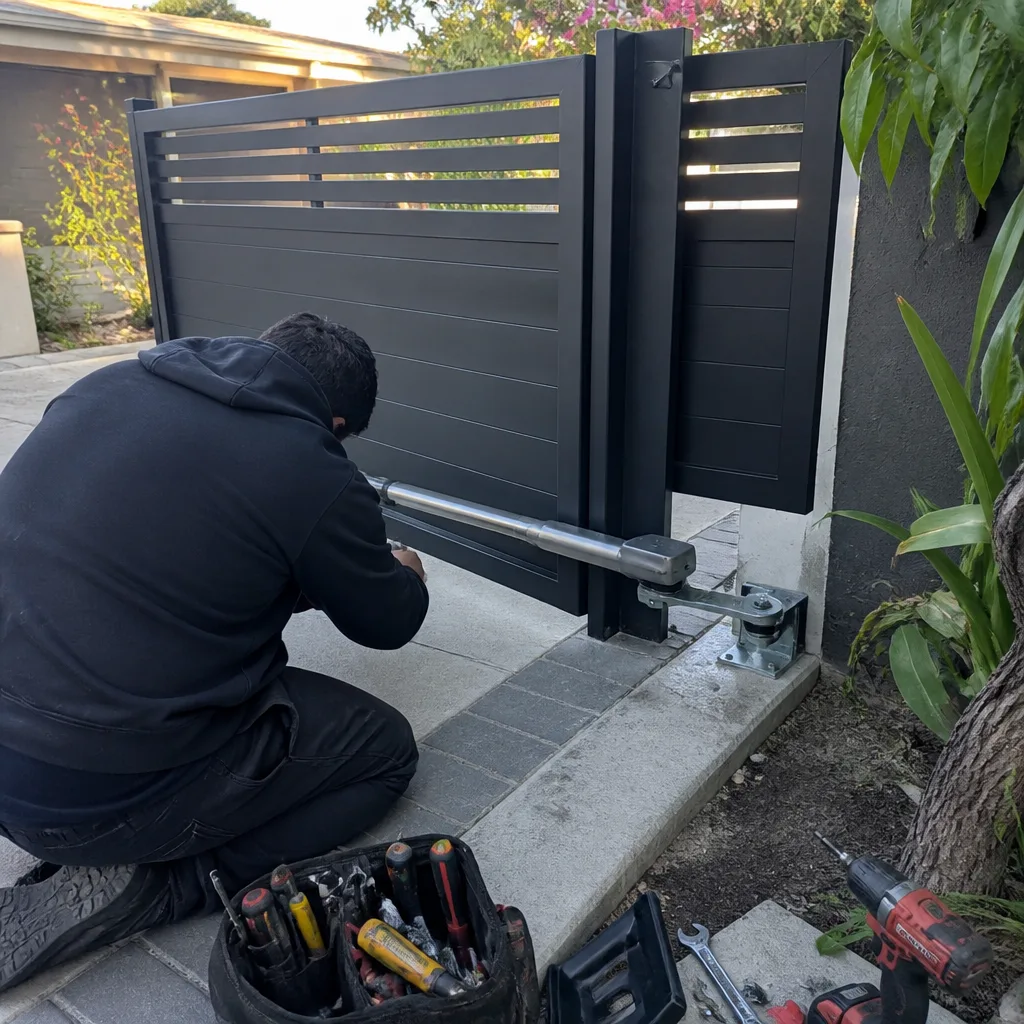 After
After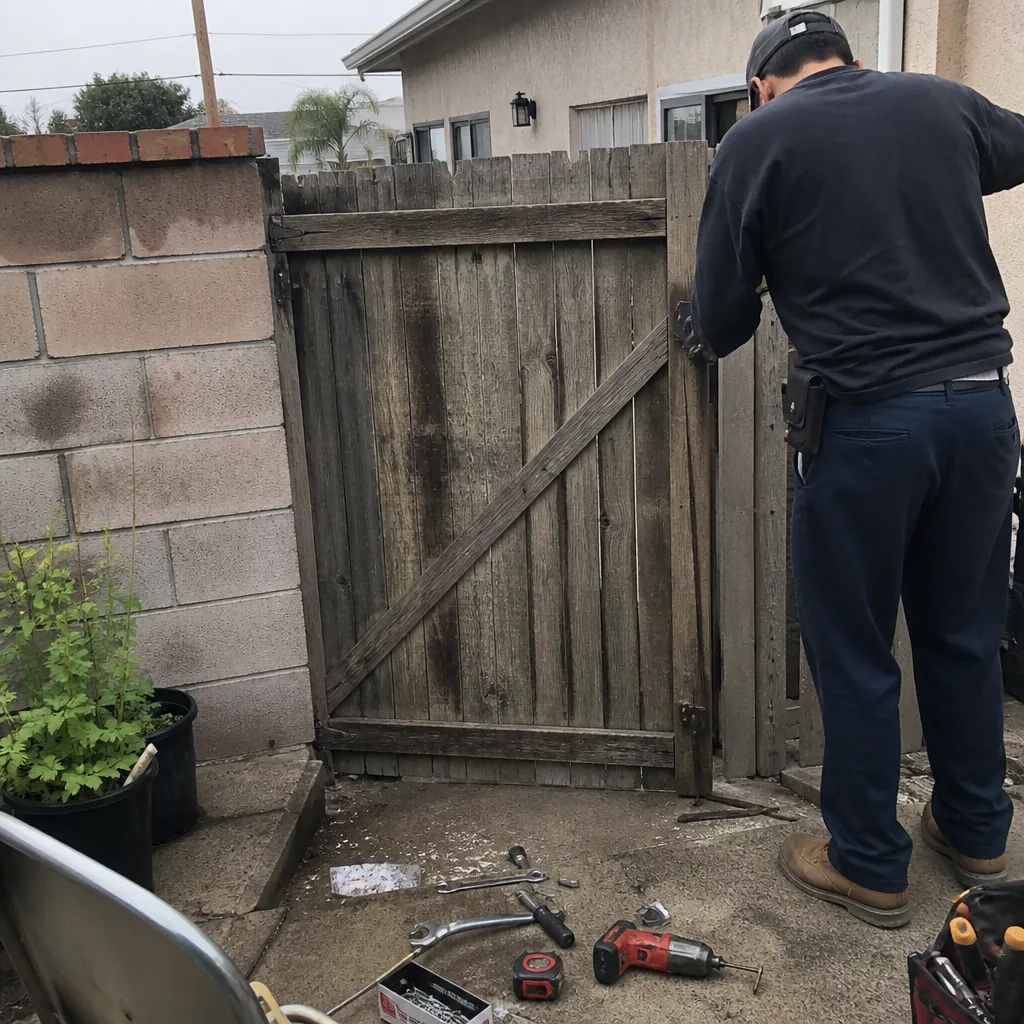 Before
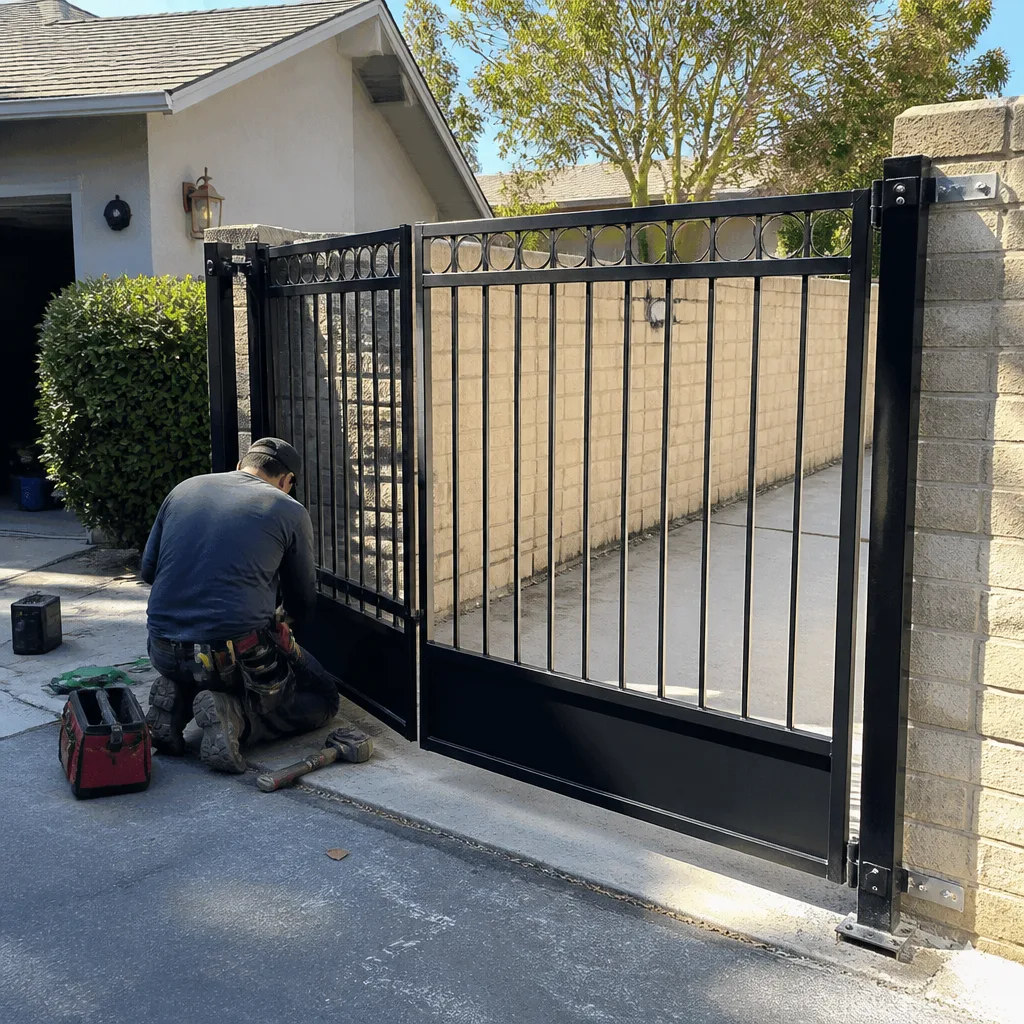 After
AfterThe Complete Guide to Gate Repair in Torrance
Here’s a thing most Torrance homeowners don’t know until they’ve already paid for it: the motor on your driveway gate is almost never the first component to fail. In our service records across Torrance, from the tree-lined streets of Southwood to the hillside properties in Hollywood Riviera, the first casualty is far more often a corroded ground wire hidden inside a junction box. That single corroded connection can make a healthy operator behave like it’s dead, which leads to a $1,200 motor replacement quote for what should have been a $150 wiring repair. This guide-along with our DIY vs Professional Gate Repair: The Torrance Homeowner’s Decision Guide-explains how to tell the difference, what your gate system actually contains, and how to make a repair decision you won’t regret in six months.
Quick Answer
Most gate failures in Torrance start not in the motor but in three frequently ignored systems: limit switches, ground connections, and hinge alignment. A gate that stops midway, reverses at random, or won’t close fully is often misadjusted rather than broken, and the fix is a recalibration rather than a replacement. In Torrance’s marine-influenced climate, corrosion accelerates these failures far faster than inland areas, which means the smartest first step is a diagnostic that checks ground integrity before anyone quotes a motor swap.
Table of Contents
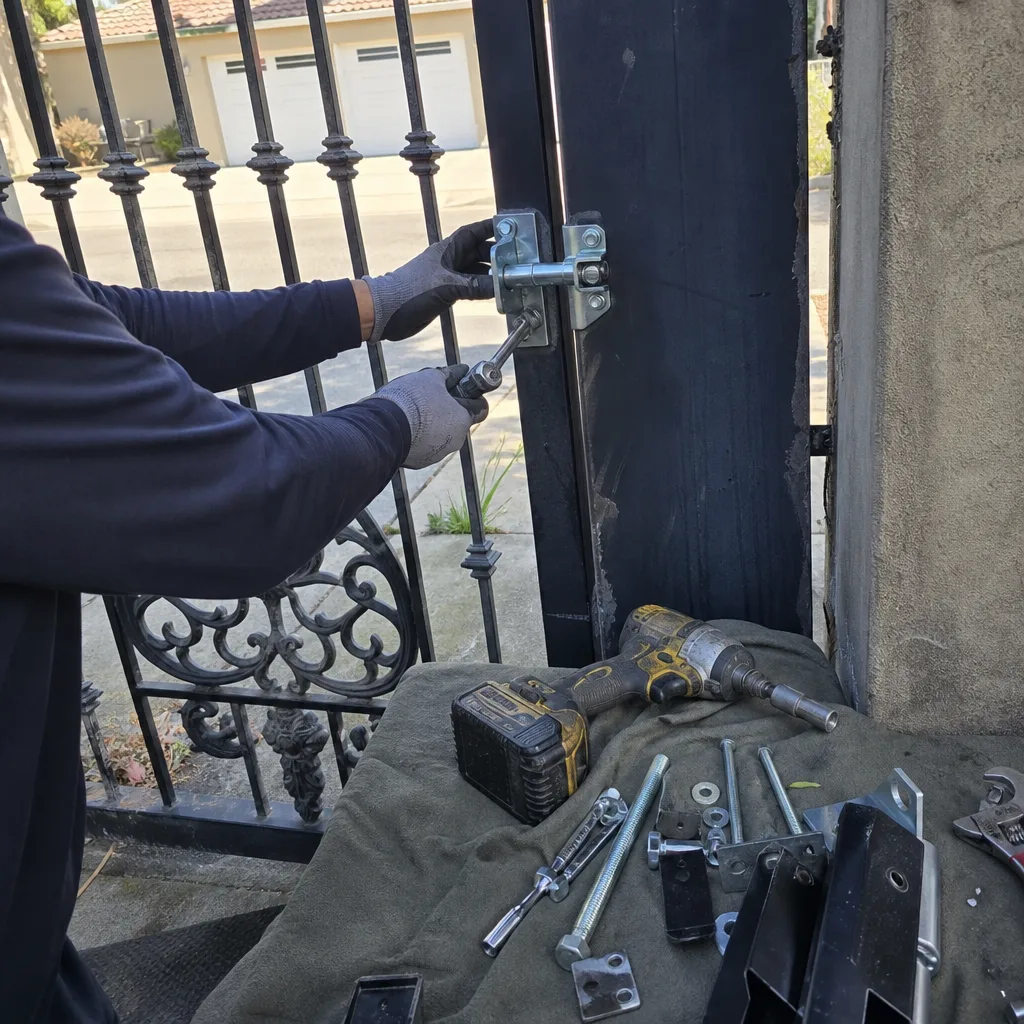
- The Three Systems That Actually Fail First
- How Torrance’s Marine Air Changes Gate Repair
- Broken vs. Misadjusted: Why Most ‘Repairs’ Are Recalibrations
- What Your Gate System Actually Contains
- How to Read a Gate Repair Invoice
- When Repair Records Matter Legally: HOAs and Insurance in LA County
- The Diagnostic Order We Use in Torrance
- What to Ask Before You Hire a Gate Repair Company
BeforeAfterThe Three Systems That Actually Fail First
If you remember one thing from this guide, make it this: the motor is downstream of everything else. A motor only runs as well as the sensors telling it when to stop, the wiring feeding it current, and the physical alignment of the gate it’s pushing. When those three systems degrade, the motor gets blamed for their failures.
1. Limit Switches
A limit switch tells the operator where the gate’s travel ends. On a swing gate, that’s the fully open and fully closed positions. On a slide gate, it’s the end of the track in both directions. When a limit switch drifts out of calibration, the gate may stop six inches short of closed, reverse unexpectedly, or slam against the post harder than it should. We routinely fix these with a screwdriver-style adjustment in well under an hour. In our experience, limit-switch recalibration accounts for a large share of what gets billed elsewhere as a ‘motor problem.’
2. Ground Connections
Every automated gate relies on a clean ground to complete its circuit. When ground wires corrode inside a junction box or at the operator’s terminal block, resistance builds. The control board starts receiving inconsistent voltage, which produces bizarre symptoms: the gate opens but won’t close, the remote works intermittently, the motor hums without moving. The repair is often as simple as cutting back the corroded copper, crimping a fresh lug, and re-securing it to the chassis ground. This is a $150 fix that gets misdiagnosed as a $1,200 motor replacement far more often than it should.
3. Hinge Alignment
Swing gates hang on hinges, and hinges wear. When a gate sags even an inch, the motor has to work against gravity instead of with it. That extra load shortens motor life, stresses the arm bracket, and causes the gate to bind at the latch. Realigning a gate means shimming or replacing hinge mounts, checking post plumb, and resetting the operator’s force settings to match the corrected geometry. It’s mechanical work, not electronic, but it’s the difference between a gate that glides and one that shudders.
How Torrance’s Marine Air Changes Gate Repair
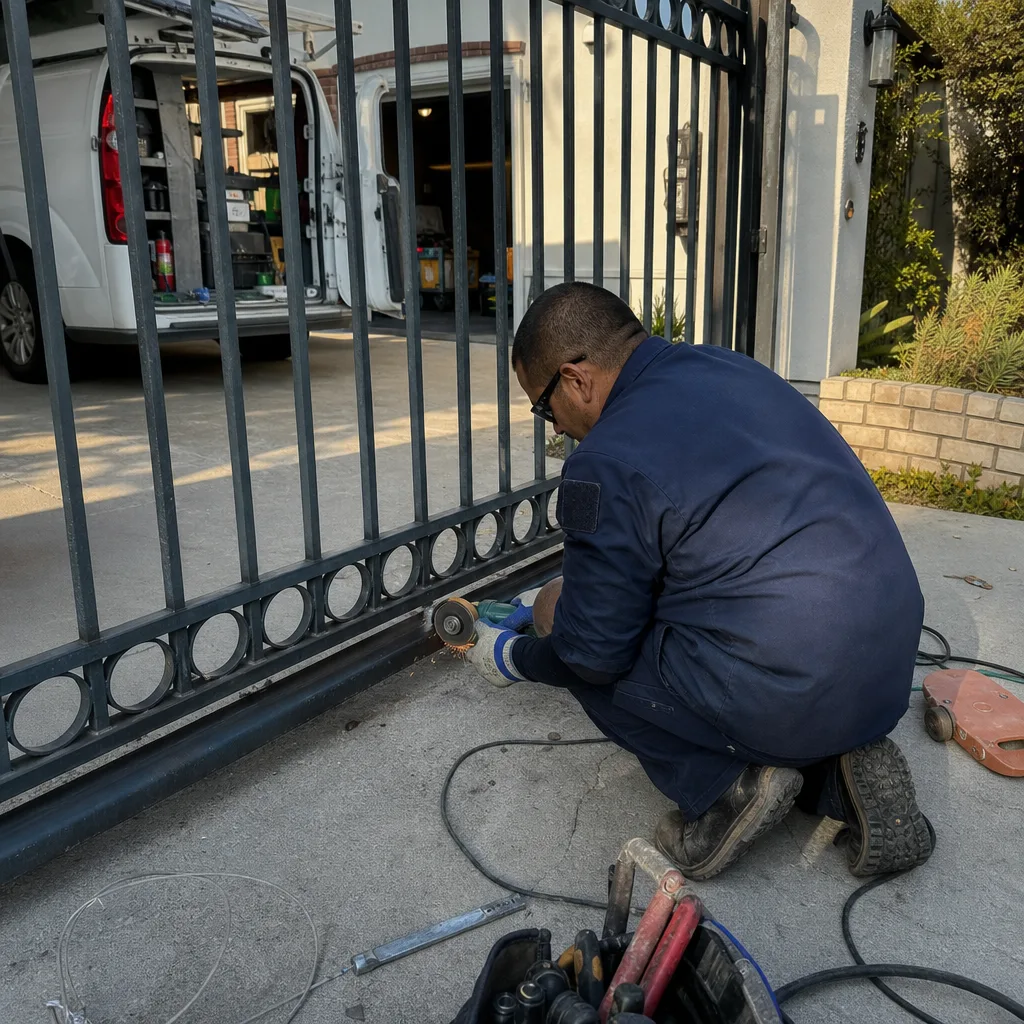
Torrance sits close enough to the Pacific that the air carries salt and moisture inland, particularly through neighborhoods west of Hawthorne Boulevard. That’s not an aesthetic observation; it’s a corrosion variable. Terminal blocks inside gate operators, wire nuts inside junction boxes, and even the copper strands inside low-voltage cable all oxidize faster here than they do in, say, Riverside or the Inland Empire.
What that means in practice: a gate installation that works flawlessly for eight years in a dry climate may develop intermittent faults within four or five years in Torrance, especially if the original installer used non-weatherproof connectors or skipped the dielectric grease. We open junction boxes in South Torrance and find green fuzz on the wire nuts; we open the same brand of box in Palos Verdes and find it worse, because the salt exposure is more direct.
What to look for in Torrance specifically:
- White or green powdery residue around terminal connections inside the operator housing
- Intermittent operation that worsens after rain or heavy morning fog
- Ground wires that crumble when touched rather than flexing
- Rust staining on the operator chassis, even on units less than five years old
The Torrance-specific lesson: before you authorize a motor replacement, ask the technician to open the junction boxes and test the ground continuity. A technician who skips that step in a coastal climate is guessing.
Broken vs. Misadjusted: Why Most ‘Repairs’ Are Recalibrations
There’s a meaningful difference between a gate that is broken and a gate that is misadjusted. A broken gate has a component that failed: a motor with burned windings, a control board with a blown capacitor, a gear that stripped. A misadjusted gate has components that work but are set wrong: limit switches, force settings, photo-eye alignment, or hinge load.
Misadjustment is far more common than breakage. Roughly two-thirds of the service calls we handle in Torrance involve a gate that still has functional parts but incorrect settings. The fix is diagnosis and recalibration, which costs less and takes less time than a parts replacement.
Here’s the diagnostic distinction we use:
- Does the motor respond at all? If yes, and the gate moves but stops in the wrong place, suspect limit switches. If no, check power and ground before anything else.
- Does the gate bind at a specific point? If yes, suspect hinge alignment or a warped section, not the operator.
- Does the gate behave differently in wet weather? If yes, suspect corrosion in a junction box or a failing ground connection.
- Does the gate reverse for no apparent reason? If yes, suspect photo-eye misalignment or a dirty lens, not a bad motor.
Most ‘repairs’ billed as motor replacements involve a motor that was still good. The symptom was real; the diagnosis was not. Ask for the part back. A reputable technician will show you the failed component and explain the failure mode.
What Your Gate System Actually Contains
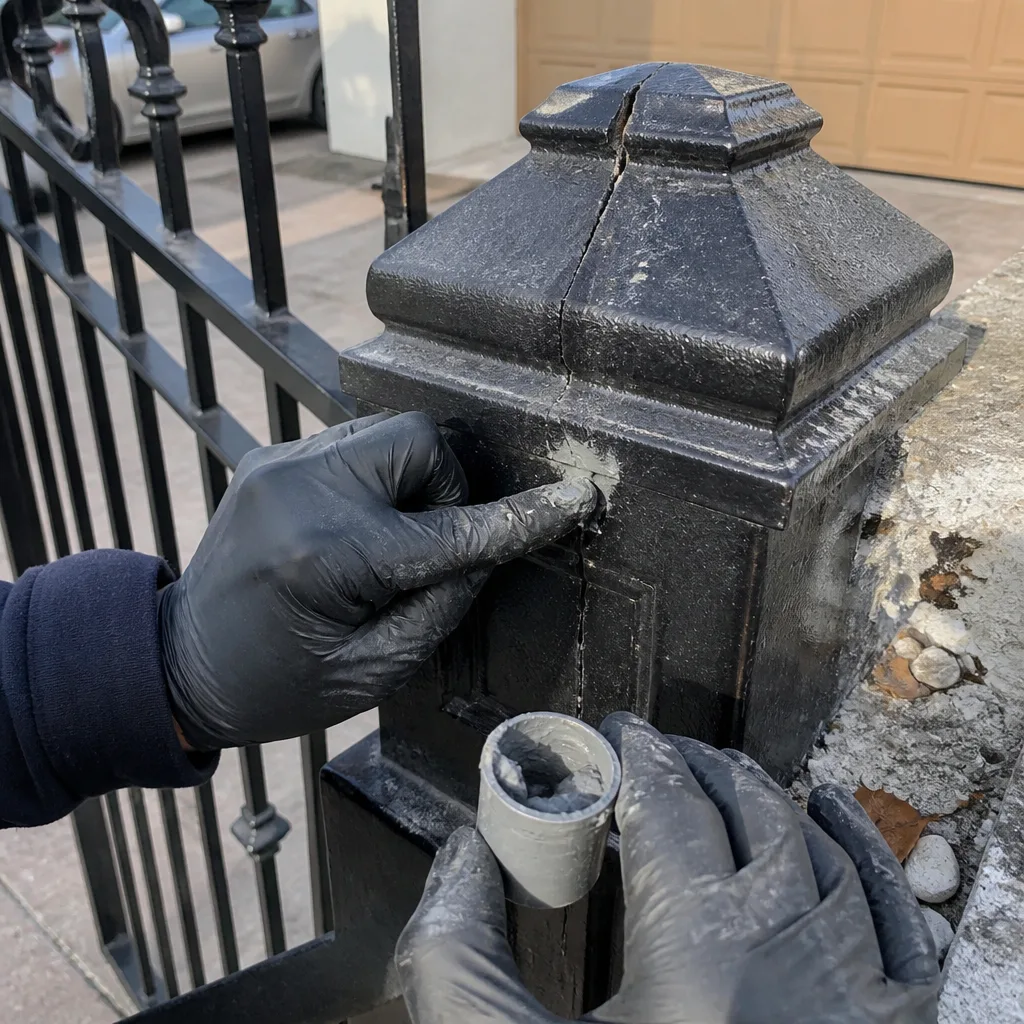
Before you can read an invoice or describe a problem over the phone, it helps to know what parts make up a modern automated gate. Here’s the full system, the way a technician sees it.
The Operator
This is the motor and gearbox assembly, either a swing-arm unit mounted on the gate post or a slide operator mounted at the end of the track. Brands we service in Torrance include LiftMaster, FAAC, BFT, and Linear, among others. The operator is the muscle, not the brain.
The Control Board
The control board sits inside the operator housing and translates inputs into action. It processes signals from the keypad, the remote receiver, the loop detectors, and the entrapment sensors, then tells the motor what to do. Control board failure is rare compared to wiring failure leading to the board.
The Loop Detectors
Loop detectors are wire loops buried in the driveway that sense the metal mass of a vehicle. On a residential driveway gate in Torrance, there’s usually an exit loop inside the property and a safety loop outside. When a loop detector fails, the gate won’t open automatically for a car approaching from one direction.
Entrapment Protection
Federal safety standards (UL 325) require automated gates to reverse or stop when they encounter an obstruction. The most common form is the photo-eye: an infrared beam across the gate opening that stops the gate if anything breaks the beam. Some systems add contact edges, rubber strips containing pressure sensors along the gate’s leading edge. If your gate closes on a car or a child, the entrapment protection has been bypassed or misaligned. That’s a serious safety issue, not a cosmetic one.
The Power Supply
Most residential operators run on 120V AC from the house, stepped down to low voltage for accessories. Some run on solar-charged batteries, which introduces a whole separate maintenance schedule for battery replacement. In Torrance’s coastal air, the transformer and its connections are prime corrosion targets.
The Receiver and Remotes
The receiver listens for your remote’s signal and relays the command to the control board. Receiver failures are rare; remote battery failures are common. A gate that won’t respond to any remote but works from the keypad points to the receiver, not the motor.
Knowing these six components lets you describe a problem accurately: ‘the gate opens from the keypad but not from the remote outside the gate’ tells a technician far more than ‘the gate doesn’t work.’
How to Read a Gate Repair Invoice
An invoice should tell you more than the price. It should tell you exactly what was found, what was changed, and what the technician left behind. When you can read an invoice critically, you can confirm that the repair addressed the actual fault rather than an adjacent symptom.
What a legitimate invoice should include:
- Specific part numbers and brand names (for example, BFT limit switch part #P123, not just ‘limit switch’)
- Hourly labor broken out from parts
- The diagnostic finding in plain language (‘ground lug at terminal 4 corroded; voltage reading 9.2V before repair, 24.1V after’)
- Any settings or limit switch positions that were changed
- Photographic evidence of the failure, if available
Red flags to watch for:
- ‘Motor replacement’ without a description of the motor failure
- Multiple unrelated parts billed on a single visit without explanation
- ‘Control board replaced’ when the control board was not shown to you afterward
- Labor charges inconsistent with the reported work (a $200 part and four hours of billed labor for what should have been a one-hour job)
The invoice is your audit trail. At Vance Gate Repair Torrance, we hand over a written scope and price before work begins and a documented photo record of what was found and what was replaced when the job is done. That record becomes yours to keep, to dispute, or to show the next technician.
When Repair Records Matter Legally: HOAs and Insurance in LA County
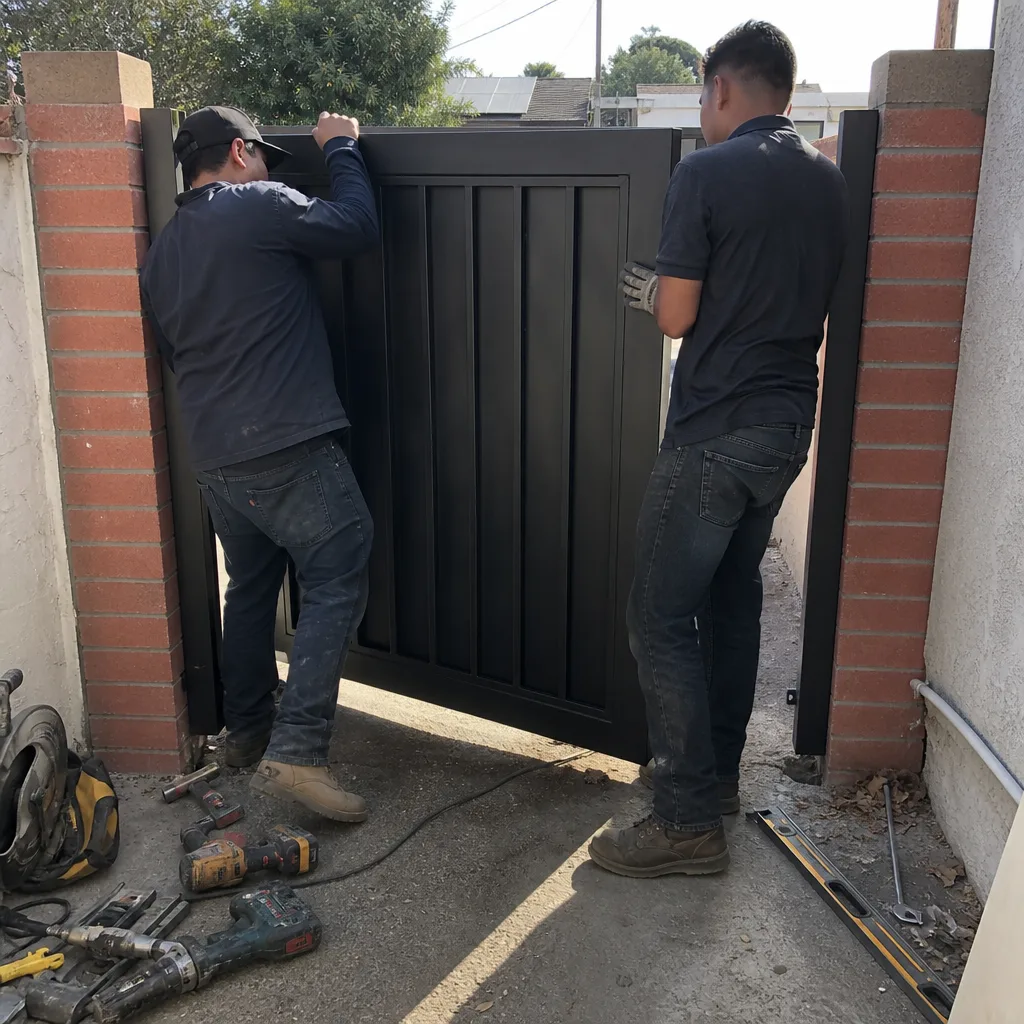
Gate repair records stop being a courtesy and start being a legal necessity under two specific conditions: HOA disputes and insurance claims. In Los Angeles County, both are common enough that Torrance homeowners should treat documentation as part of the repair itself.
HOA Disputes
If your gate is part of a shared entry system or governed by a homeowners association in Torrance, the HOA may be responsible for some portion of the maintenance, or they may hold you responsible for maintaining a consistent appearance and function. When a dispute arises over who pays for what, the party with documentation wins. A written service record showing the model number, the repair performed, and the date establishes a maintenance history that a verbal ‘I had it fixed last year’ cannot.
Insurance Claims
A gate that fails and damages a vehicle, or a gate that malfunctions and causes an injury, becomes an insurance matter. The insurer will ask what maintenance was performed and when. If you cannot produce records, the claim gets slower and the settlement gets smaller. If you can produce a photo log showing the entrapment protection was tested and functioning at the last service visit, the claim has a foundation.
This is one reason we structure every gate repair in Torrance with the same discipline we use on commercial access-control jobs: written scope first, photographed evidence throughout, and a final record left with the homeowner. It’s not about being thorough as a personality trait; it’s about leaving a paper trail that protects you.
The Diagnostic Order We Use in Torrance
When we dispatch a technician to a gate repair call in Torrance, the diagnostic follows a set order. This order reflects the failure patterns that dominate in this specific coastal market, and it prevents the most expensive mistake: replacing a motor that was never the problem.
- Power and ground first. Confirm the operator is receiving correct voltage, and test the ground connection at the terminal block and at the chassis. In Torrance, this step catches corrosion issues that masquerade as every other symptom.
- Limit switches second. Check travel limits in both directions and verify the motor stops at the correct points. Misadjusted limits are the most common cause of a gate that stops midway or reverses.
- Entrapment protection third. Test the photo-eye alignment and any contact edges. Confirm the gate reverses under obstruction.
- Mechanical load fourth. Disengage the operator and push the gate by hand. A gate that’s hard to move by hand is a hinge or track problem, not an electronics problem.
- Control board and accessories fifth. Only after the physical and electrical basics are confirmed do we test the board, receiver, and keypad.
- Motor last, and only with evidence. If everything above checks out and the motor still fails, we test the motor windings and show you the failure before we quote a replacement.
That last step matters. A technician who jumps straight to the motor is skipping the cheap fixes. Gate motor and opener service in Torrance should always begin with the diagnostic order above, because the order protects you from paying for a replacement you didn’t need.
What to Ask Before You Hire a Gate Repair Company
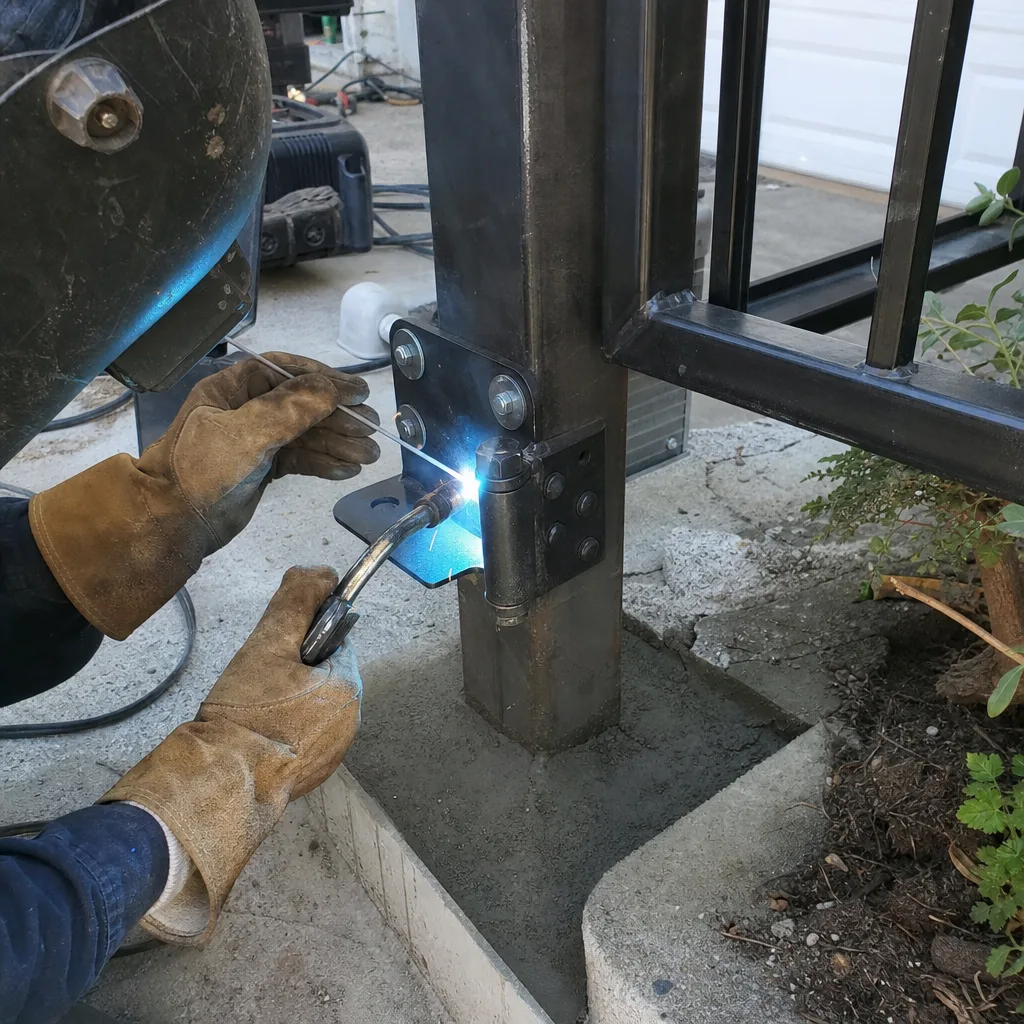
You’re not hiring a technician; you’re hiring an outcome. These are the questions that separate a company that will document its work from one that will bill you for a best guess.
Ask these directly:
- ‘Will you give me a written price before any work starts?’ If the answer is no or any version of ‘we can’t know until we open it up,’ ask what the diagnostic fee covers and whether it’s applied to the repair.
- ‘Which brands of operator do you service?’ A company that only works on one brand will steer you toward that brand, even when a repair on your existing FAAC or BFT unit would cost less. We service nine automation brands, so we repair what’s on the property rather than replacing it.
- ‘Will you leave me a photo record of what you found and what you changed?’ This single question separates evidence-based technicians from invoice-based ones.
- ‘What does your warranty cover, in writing?’ A verbal ‘we warranty our work’ is worth less than a written promise. Ask for the terms.
- ‘Who is the technician coming to my house?’ A company that cannot tell you a name before dispatch cannot tell you who was on your property after the fact.
At Vance Gate Repair’s Torrance installation and repair division, the answers to those questions are standardized under The Haven Standard: a written price before work starts, a documented photo record on every visit, and a written 365-day promise on completed work. That’s not marketing language; it’s operational procedure.
What Gate Repair Typically Costs in Torrance
Pricing transparency matters more in gate repair than in almost any other home service, because the price gap between a minor adjustment and a full replacement is enormous and the average homeowner cannot tell the difference from a phone description. Here’s what we quote in the Torrance market, based on current rates for 2024 and 2025 service records.
| Service | Typical Range | What Affects the Price |
|---|---|---|
| Limit switch recalibration | $95-$185 | Number of operators, accessibility, whether the housing is corroded |
| Ground connection repair | $120-$250 | Location of the junction box, severity of corrosion, number of affected connections |
| Photo-eye realignment or replacement | $110-$275 | Whether the eye is misaligned or dead, model compatibility |
| Hinge realignment | $180-$400 | Number of hinges, post condition, whether welding or shimming is required |
| Control board replacement | $350-$900 | Brand, model, whether the board is still manufactured |
| Swing motor replacement | $650-$1,450 | Brand (FAAC and BFT units typically run higher than Linear or Mighty Mule), arm bracket condition |
| Slide motor replacement | $800-$1,700 | Operator model, chain vs. rack drive, control board compatibility |
Every price we quote is written and handed over before any tool comes out of the truck. You agree to the number before the work starts, which means no discovery invoice at the end. That’s Haven Standard Clause 1: have it in writing.
What a Full Gate Installation Includes
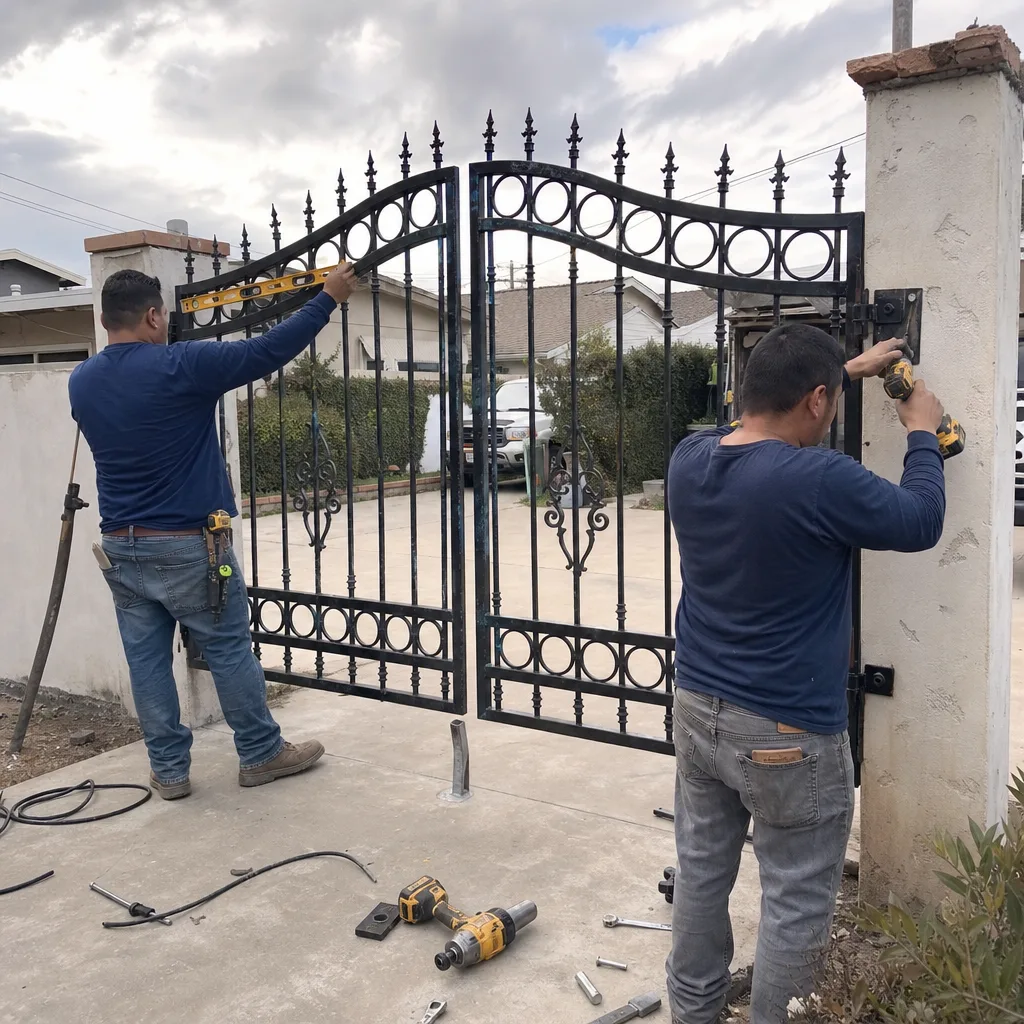
If your gate has failed to the point that replacement makes more sense than repair, it’s worth knowing what a complete installation should cover. A gate is not a fence panel; it’s a mechanical and electrical system that has to work safely every time, without fail, for years.
A complete installation includes:
- Site measurement and gate sizing based on the actual driveway width, not the old gate’s dimensions
- Post setting and reinforcement, with consideration for Torrance soil conditions and coastal wind load
- Gate fabrication or factory ordering based on the measured opening, in the material and style that matches the property (wrought iron, steel, aluminum, or wood)
- Operator selection matched to gate weight, not just gate length
- Entrapment protection installation and testing to UL 325 standards
- Full wiring run from the house panel to the operator, with weatherproof connections rated for coastal exposure
- Programming of remotes, keypads, and any loop detectors
- Final documentation: wiring diagram, photo log, operator manual, and warranty information
For a deeper look at what’s involved, see our page on gate installation in Torrance. Whether you’re repairing or replacing, the underlying principle is the same: know what you’re paying for before you pay.
What happens when you call
- 1
A real person answersNo phone trees - you reach a local pro.
- 2
You get an upfront price rangeHonest numbers before anyone is dispatched.
- 3
A background-checked tech heads outLicensed & insured, dispatched right away.
- 4
You approve before work beginsNothing starts until you say go.
Common Mistakes to Avoid
- Authorizing a motor replacement without a ground test. In Torrance’s salt air, corroded grounds are the most common cause of motor-like symptoms. Skip the test, and you may pay $1,200 to fix a $150 problem.
- Adjusting limit switches without marking the original positions. Once moved, limit settings are hard to restore from memory. A technician who doesn’t photograph or note the before positions is making your gate worse on purpose.
- Ignoring a gate that’s getting slower. Gates don’t recover on their own. A slow gate is usually a hinge or capacitor issue that will become a full failure if left alone.
- Bypassing a photo-eye because it’s ‘always been annoying.’ Entrapment protection exists to prevent injury. Disabling it is a code violation and a liability you don’t want.
- Paying a deposit over the phone to a company you’ve never met. Reputable Torrance gate repair companies don’t require deposits for diagnostics. The first visit should be a free or diagnostic-fee visit, not a prepaid commitment.
- Throwing away the old part. Keep every replaced component until you’re certain the repair solved the problem. The old part is your evidence if the new one fails.
When to Call a Professional
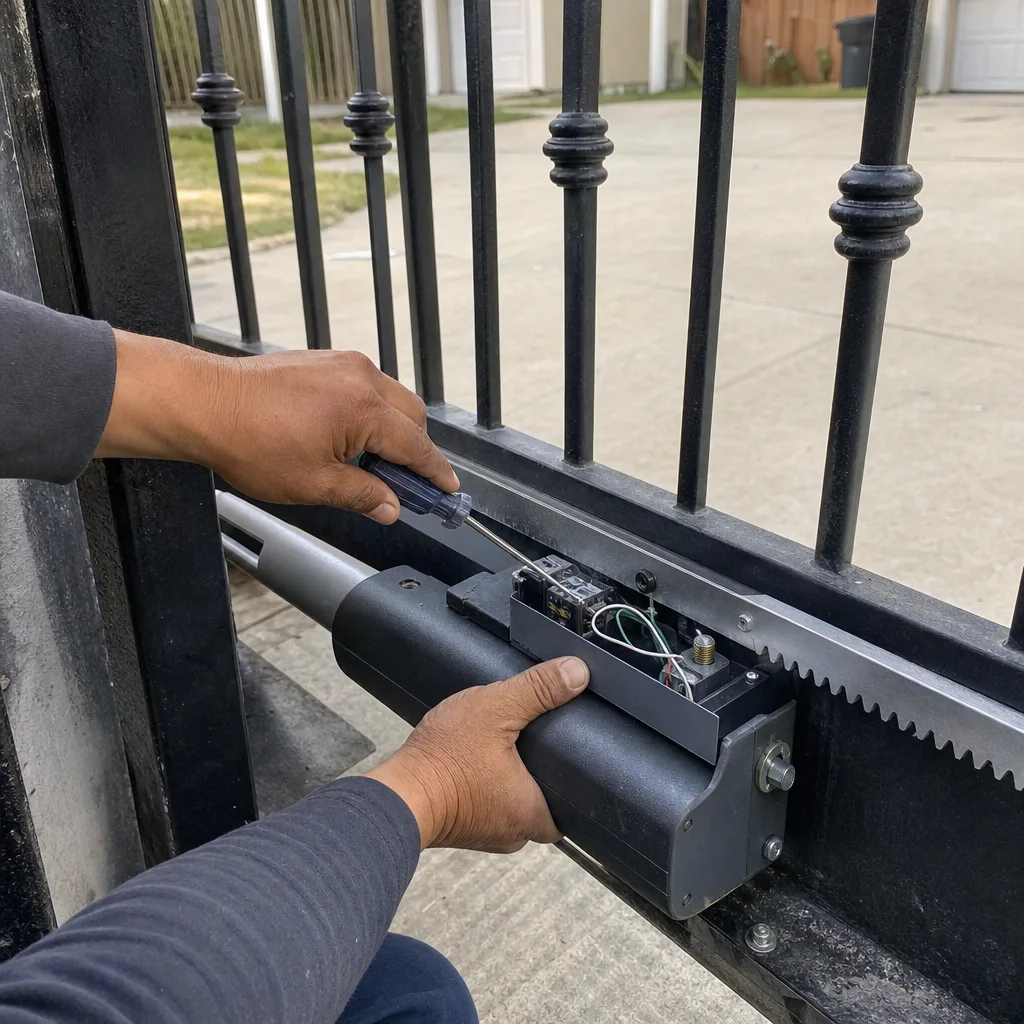
Call for professional gate service when the gate stops responding entirely, moves erratically, makes grinding noise under load, or reverses onto a car or person. These are not DIY-friendly symptoms; they indicate a problem in the electrical, mechanical, or safety system that requires test equipment and experience to diagnose accurately. In Torrance, where corrosion complicates the picture, a trained eye reading voltage and resistance readings will find the fault faster than any amount of forum research. Gate Repair services from Vance Gate Repair Torrance include free estimates in Torrance, with a written price before any work begins. Call (424) 373-8425 to schedule.
Frequently Asked Questions
Intermittent operation usually points to a corroding connection, not a failing motor. In Torrance’s marine air, ground connections and terminal blocks oxidize over time, and the resulting resistance changes with temperature and humidity. The fix is often a wiring repair, not a motor replacement.
Most Torrance gate repairs fall between $95 and $450, depending on the component. A limit-switch recalibration or photo-eye realignment sits at the low end; a hinge realignment or control board replacement sits at the higher end. Motor replacements run from $650 to $1,700 depending on brand and gate type. Call (424) 373-8425 for a written quote before any work starts.
It’s a safety system responding to an input it’s receiving. The problem is usually a misaligned photo-eye, a dirty lens, or a limit switch set incorrectly. It’s not dangerous in the sense that the gate is failing unsafe; the reverse is the safety feature working. But it should be corrected, because a gate that won’t close is a gate that can’t secure your property.
Yes. We service FAAC, BFT, Linear, Viking, LiftMaster, Ghost Controls, DoorKing, Elite, and Mighty Mule operators. We repair the brand that’s already on your property rather than steering you toward a replacement unit, because in most cases a repair costs a fraction of a new installation.
For repair work on an existing permitted gate system, no. For new installation or major structural changes, the City of Torrance may require permits depending on the scope, particularly for gates accessing a public right-of-way or exceeding certain height restrictions. Your gate company should be able to tell you if your specific project needs one.
A legitimate invoice should list specific part numbers, show labor broken out from parts, describe the diagnostic finding in plain language, and ideally include photos of what was found and what was changed. If the invoice says ‘motor replacement’ without describing what failed on the motor, ask questions before you pay.
The Bottom Line
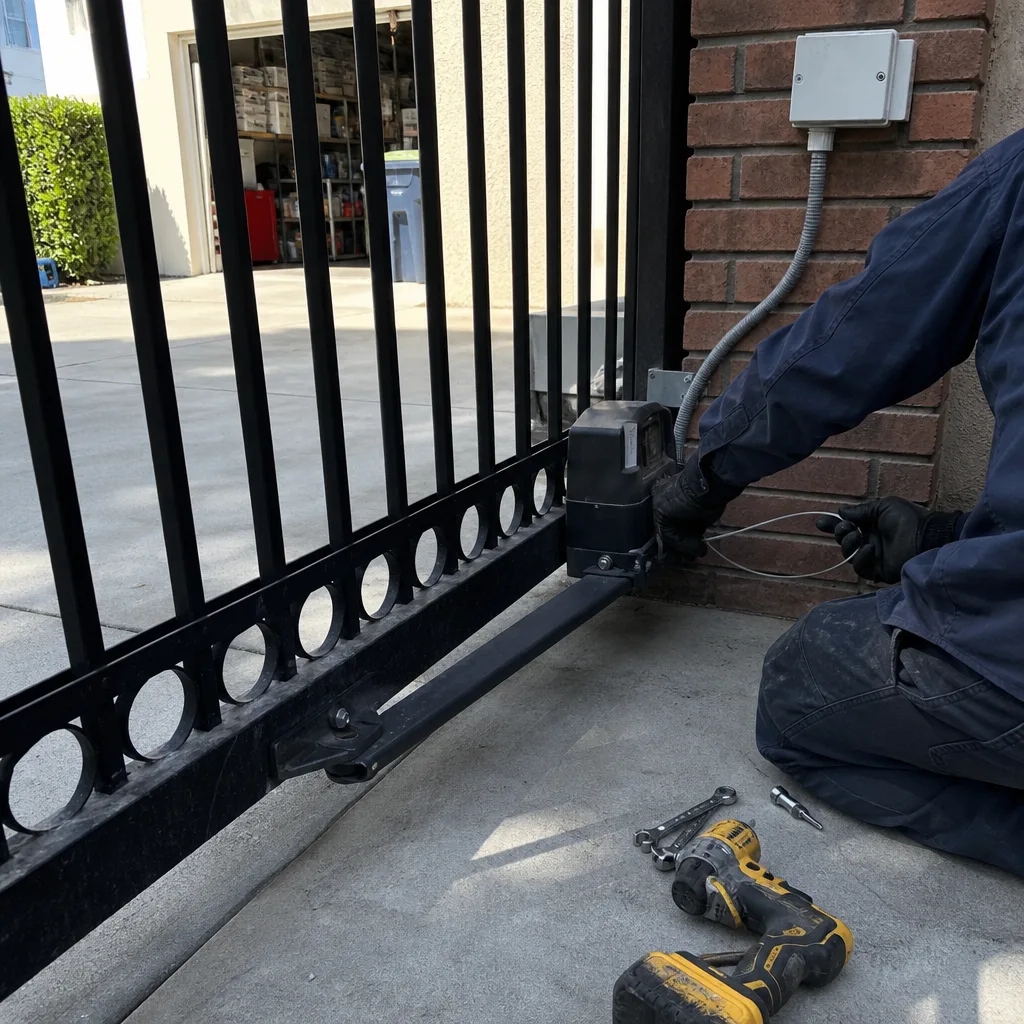
Most gate failures in Torrance are not motor failures. They’re limit-switch drifts, corroded ground connections, and hinge misalignments that produce motor-like symptoms. In a coastal climate like Torrance’s, corrosion accelerates every connection problem, which means the diagnostic order matters as much as the repair itself. Get a written price before work starts, ask for the failed part, and keep your service records, especially if you share gate infrastructure with an HOA or may need to file an insurance claim. The right repair is usually the cheaper one, and the only way to guarantee that is to hire a company that shows you the evidence. For more guides & resources, visit our blog.
For gate repair in Torrance with a written price before any work begins, call (424) 373-8425. We’ll diagnose the problem, document what we find, and leave you with a photo record of every adjustment.
Written by Adrian Vance, Owner at Vance Gate Repair Torrance, serving Torrance since 2014.