
Last updated September 20, 2026
Free on-site gate assessment - hinges, posts, and your LiftMaster or Nice gate operator checked before anything is quoted
The assessment is free and the quote is the invoice.
 Before
 After
After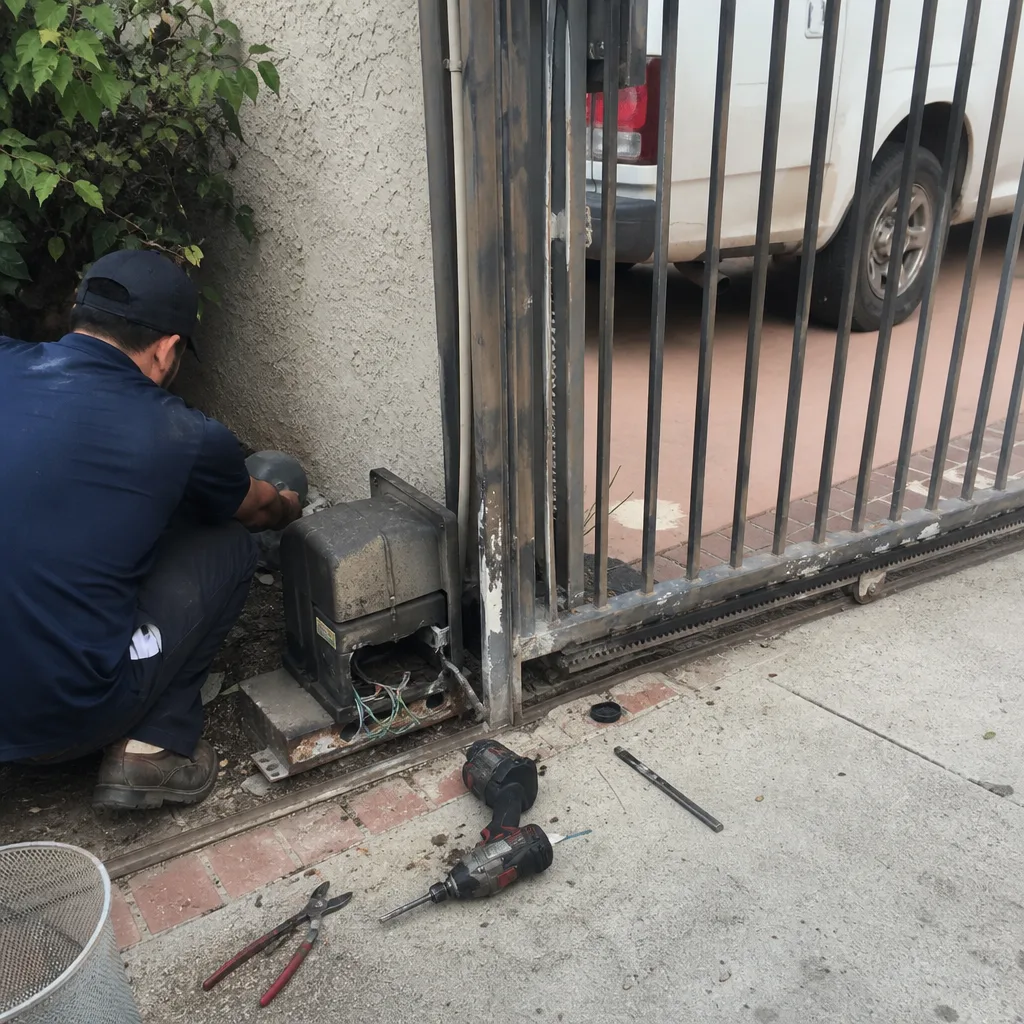 Before
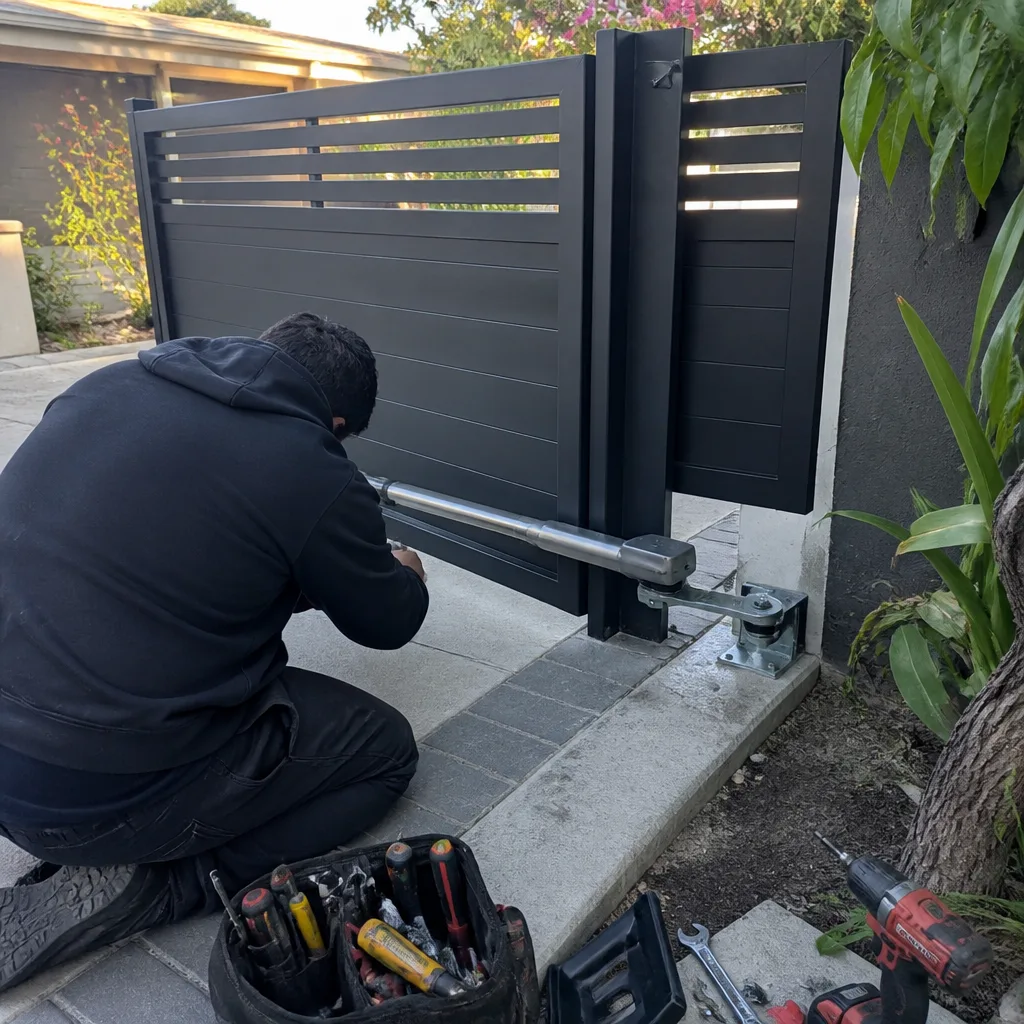 After
After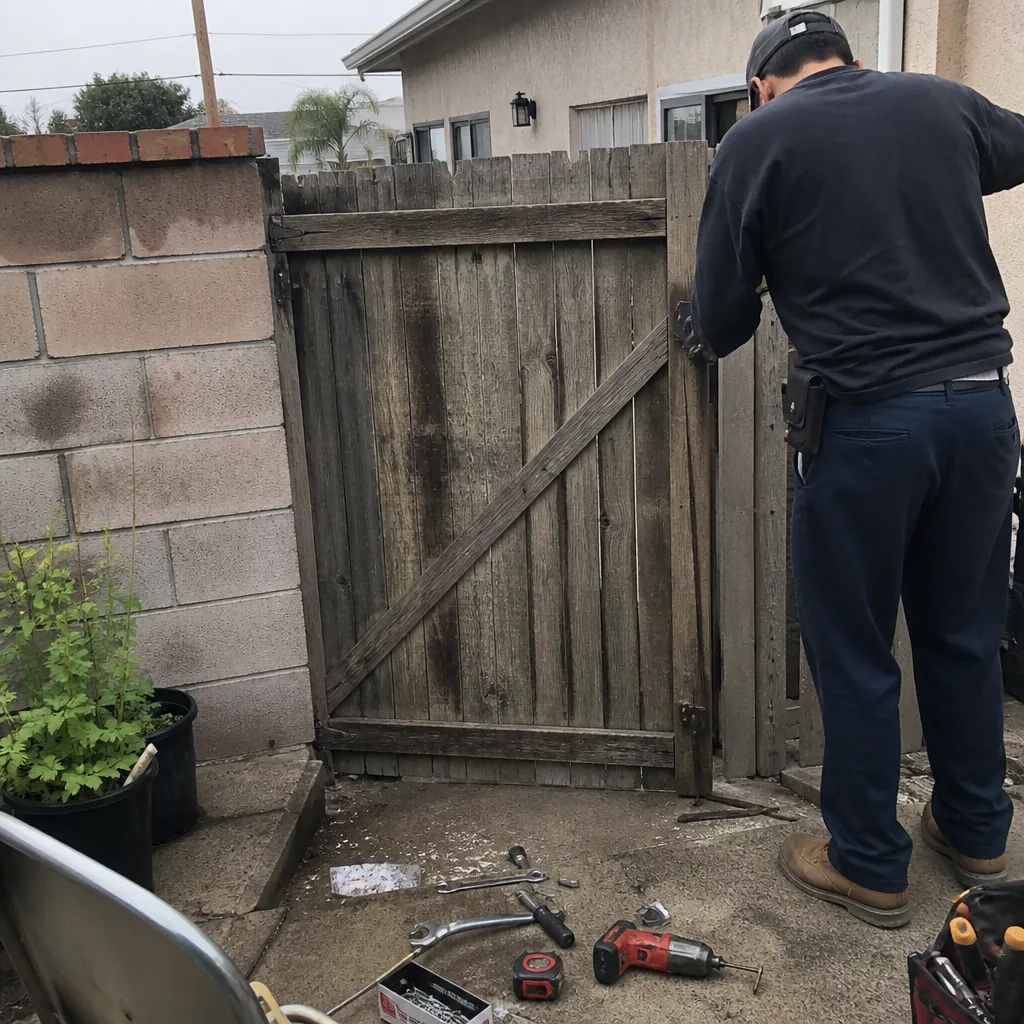 Before
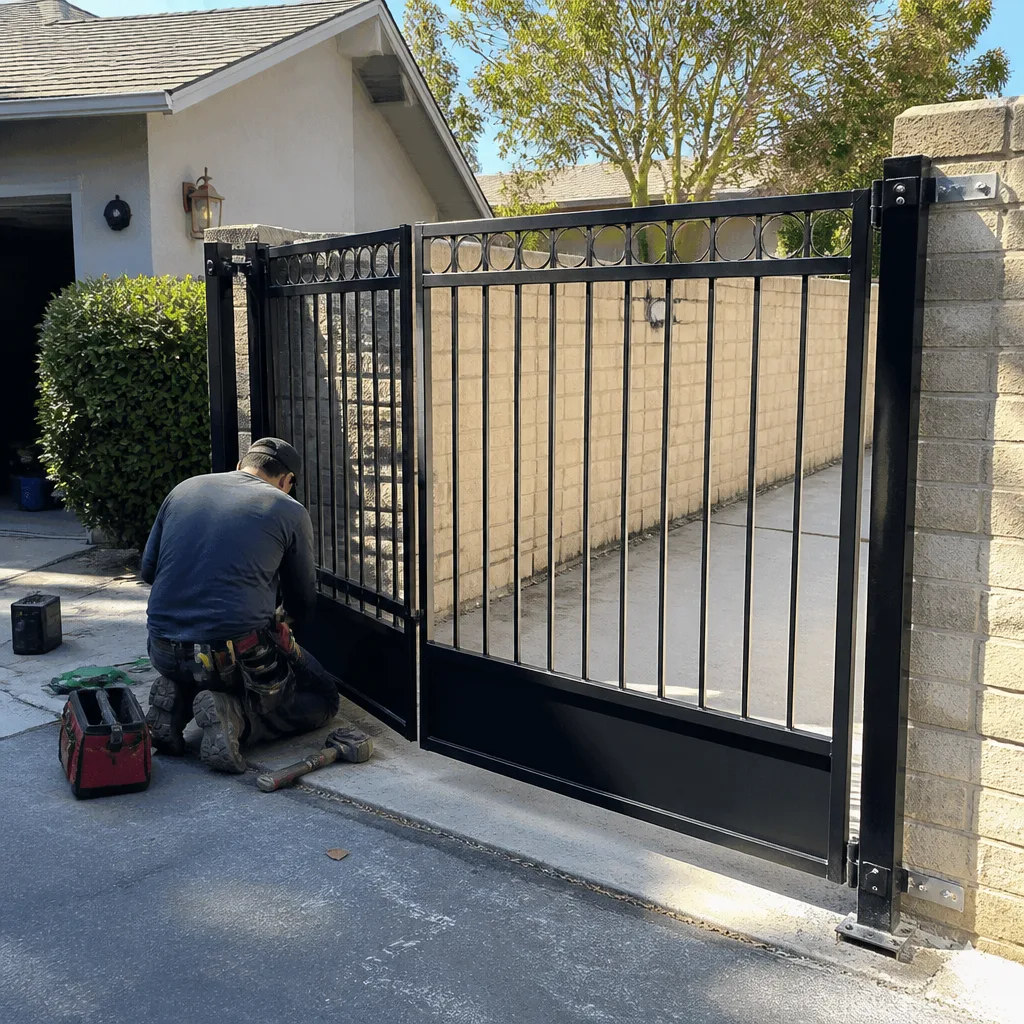 After
AfterGate Repair Warning Signs: A Torrance Homeowner’s Reference Guide
Here’s a counterintuitive fact from the field: a gate that reverses unexpectedly isn’t malfunctioning. It’s doing exactly what its entrapment protection is designed to do. The real problem is whatever triggered that protection: a misread limit switch, a debris-blocked safety sensor, or a hinge binding under load. Most Torrance homeowners call us when the gate stops moving entirely. But the expensive failures almost always announce themselves weeks earlier, in behaviors and visual clues most people never think to check. This guide covers both categories: the signs your gate tells you through behavior, and the signs you have to find by looking. For how to hire a gate repair contractor in Torrance, see our step-by-step guide. By the end, you’ll know what to watch for, what it likely means, and what to document before you call a technician.
Quick Answer
The most common gate repair warning signs in Torrance are slow or jerky movement, random reversal, remote lag that gets worse over time, and grinding or scraping sounds during operation. Visual signs like cracked wire insulation, rust inside the operator housing, and hinge wear are equally important but often missed because they require a flashlight and five minutes of looking. If you notice any of these, document them with your phone and get a written diagnosis before the gate fails completely. For gate repair in Torrance, we always provide written quotes before any work begins.
Table of Contents
- Behavioral Warning Signs: What Your Gate Is Telling You
- Visual Warning Signs You Need a Flashlight to Find
- Symptom-to-Cause Map: Matching Behavior to the Failing Component
- Why a Gate That ‘Sometimes Works’ Is the Most Dangerous Diagnostic State
- Worn vs. Failed: When a Component Can Be Serviced and When It Must Be Replaced
- How to Document Warning Signs Before You Call a Technician
- Torrance-Specific Factors That Accelerate Gate Wear
- Common Mistakes to Avoid
- When to Call a Professional
- Frequently Asked Questions
BeforeAfterBehavioral Warning Signs: What Your Gate Is Telling You
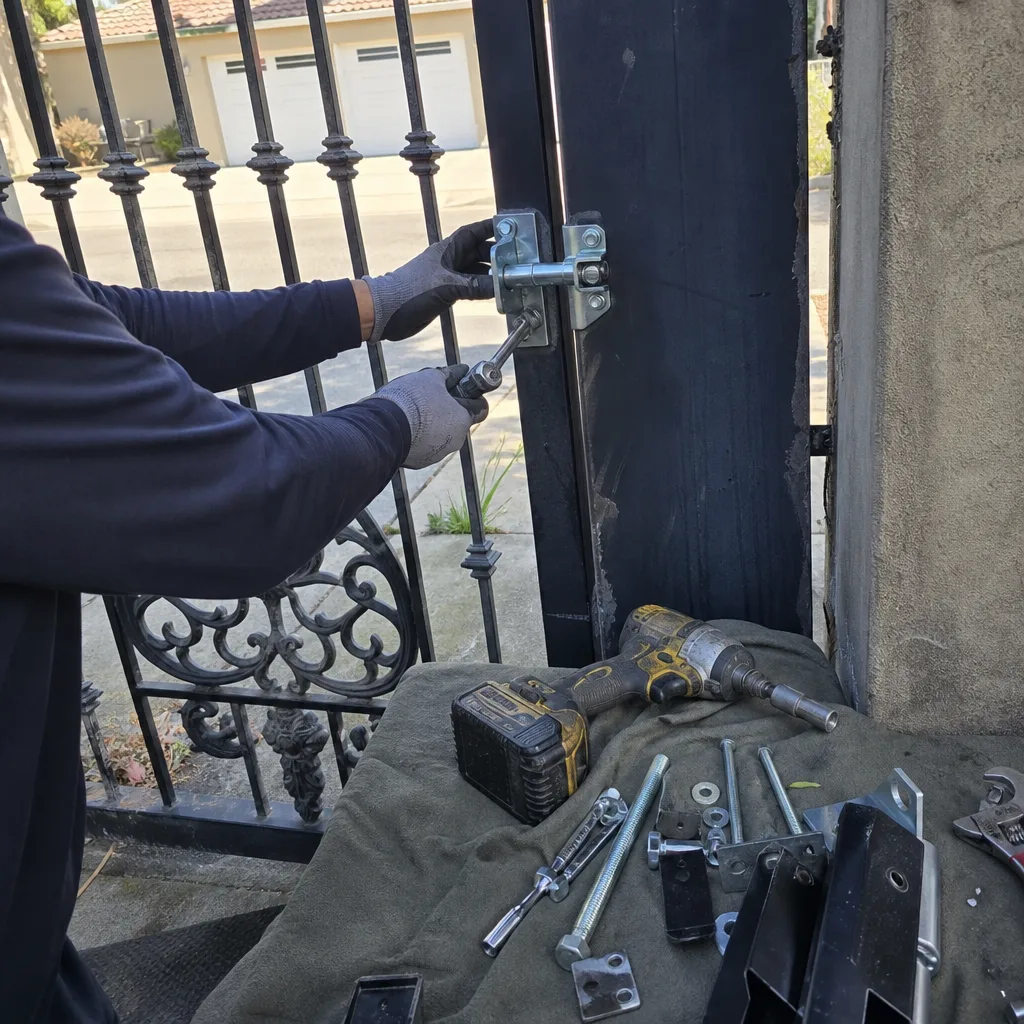
Behavioral signs are the ones you notice from the driveway or through the window: the gate opens slower than it used to, hesitates halfway, reverses for no apparent reason, or fails to respond to the remote on the first press. Each of these patterns points toward a specific category of problem, and understanding that connection saves diagnostic time when you call a technician in Torrance. The key distinction: some behaviors indicate a gate that’s working harder than it should. Others indicate a gate that’s working exactly as designed but being triggered by a false input. A gate that reverses when nothing is in the path falls into the second category. Its entrapment protection is firing correctly. The problem is whatever sensor or setting is telling it to fire.
Here’s what we tell homeowners to watch for, in order of diagnostic significance:
- Slow opening or closing, especially when it’s cool outside: This usually indicates a motor working against increased mechanical resistance. The cause is often hinge wear, a sagging gate leaf, or debris in the track. Over time, that extra load burns out motors and strips gears.
- Random reversal at a specific point in the travel: The gate moves fine, then reverses at the same spot every time. This pattern points to a limit switch set incorrectly or a physical obstruction the gate only encounters at that point in its arc. A gate with a misadjusted limit switch may also reverse because it believes it reached the end of travel when it hasn’t.
- Remote lag that gets progressively worse: The first press does nothing. The second press works. Weeks later, it takes three presses. This progression often indicates a failing receiver board or a degraded antenna connection, not a dying remote battery. If replacing the remote battery doesn’t fix it, the problem is on the gate side.
- Grinding, scraping, or metallic whine during operation: Grinding typically points to the gear train or chain drive. Scraping suggests the gate leaf is contacting the ground, a post, or a rail. A high-pitched whine is often the capacitor in the motor struggling, especially on older LiftMaster and Viking units.
- Gate stops mid-travel and doesn’t resume: This is often a thermal overload in the motor. The motor heats up under load, trips its internal protection, and stops. It resumes once it cools. This is a clear sign of excessive mechanical resistance or a failing capacitor.
For a complete breakdown of what we check during a service call, see our Gate Repair in Torrance page.
Visual Warning Signs You Need a Flashlight to Find
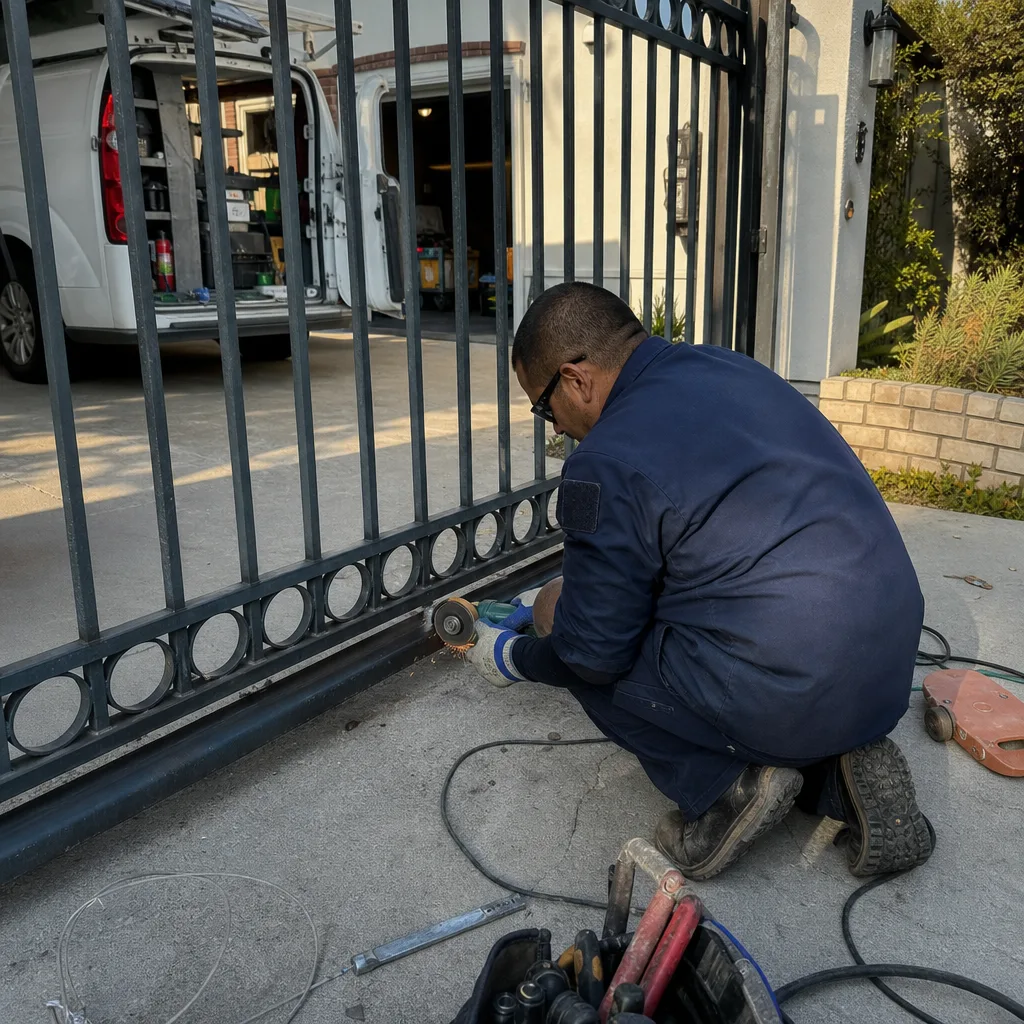
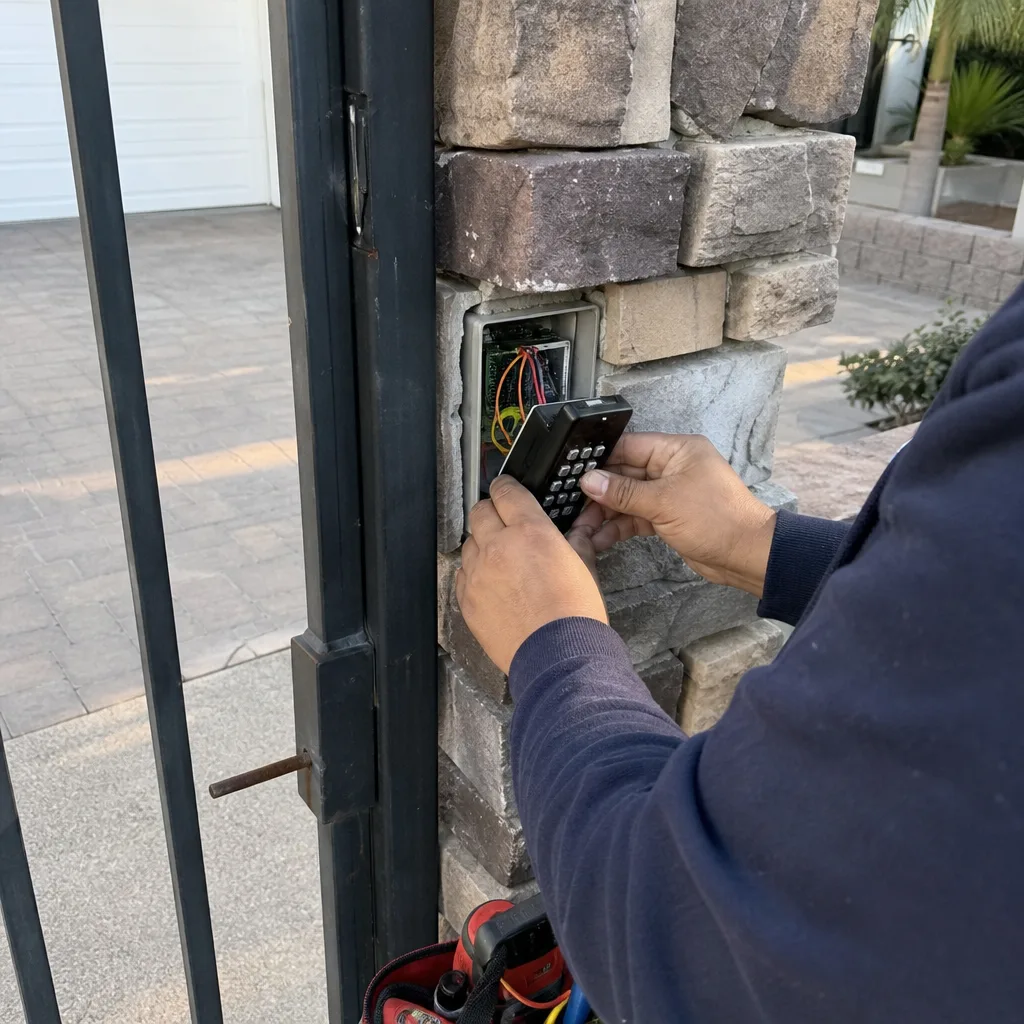
Most gate failures in Torrance are discovered by looking, not by operating. The behavioral signs get the attention because they’re visible from the driver’s seat. But the second category, the visual signs, is where the expensive damage develops quietly. These signs require a flashlight, a willingness to look inside the operator housing, and about five minutes. Here’s what to check on a quarterly basis:
Wire insulation cracking at conduit entry points
Examine every place a wire enters or exits a metal conduit, a junction box, or the operator housing. The insulation at these points takes the most stress: UV exposure breaks down the outer jacket, and sharp conduit edges abrade the inner layers. What you’re looking for is any cracking, discoloration, or exposed copper. In Torrance, the combination of salt air from the coast and intense summer sun accelerates this degradation faster than inland locations. A crack in low-voltage wiring causes intermittent shorts: the gate works in dry weather, fails when fog rolls in or irrigation runs. A crack in line-voltage wiring is a shock hazard and a fire risk. If you see exposed copper, do not touch it. Call a licensed technician.
Rust blooming inside the operator housing
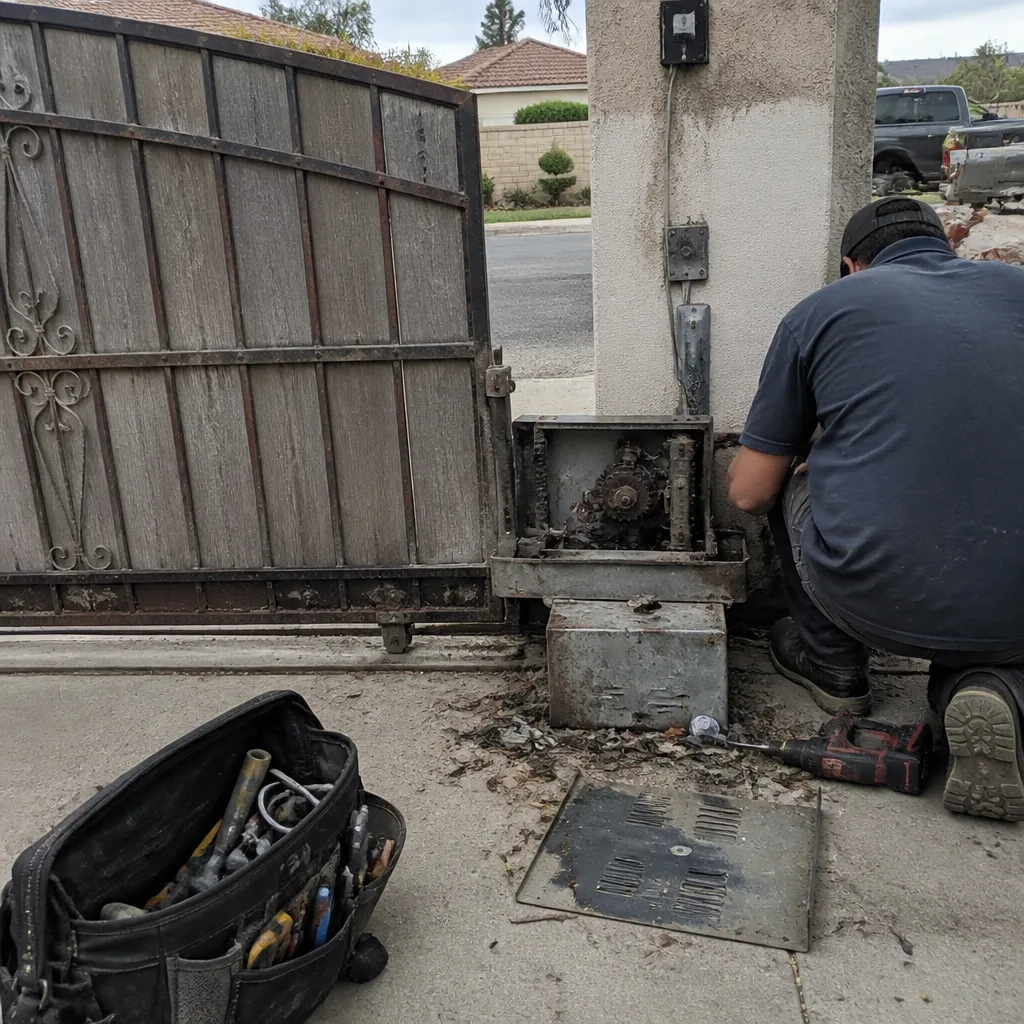
Open the operator housing cover when the power is off and look for rust on the internal frame, the gear train, or the circuit board mounting hardware. Surface rust on the frame is manageable if caught early. Rust on the gear train means the grease has broken down and metal is wearing against metal. Rust on the circuit board mounting hardware indicates moisture intrusion, which will eventually cause component failure. We see this consistently on gate operators in South Bay neighborhoods where coastal fog carries salt moisture inland. A quarterly visual check catches rust at the surface stage, before it compromises moving parts.
Loop wire surface breaks
Walk the path of your gate and look for any crack in the driveway or walkway concrete that crosses the gate’s travel area. Loop detectors, the wire embedded in the pavement that tells the gate to open or hold open when a vehicle is present, are installed in a saw cut that’s sealed with a flexible compound. Over time, that sealant cracks. Water enters the cut, corrodes the loop wire, and the wire breaks. The result is a gate that no longer detects vehicles the way it used to: it may close on a car, or it may not open when you pull up. The concrete crack itself is the visual warning sign. The loop wire break underneath is the failure it predicts.
Hinge and bracket wear you can see from the ground
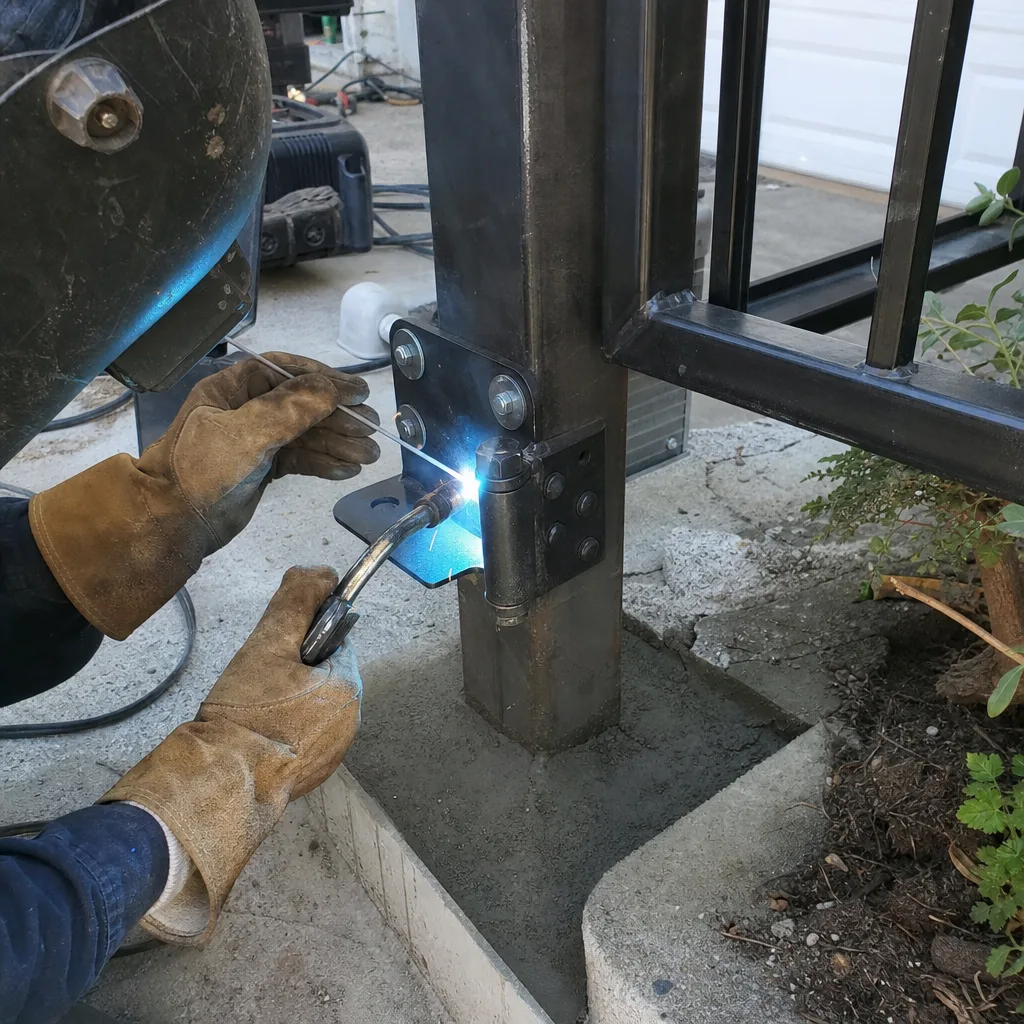
Stand back and look at the gate in the closed position. Does it hang level? Is the gap between the leaf and the post consistent from top to bottom? A gate that sags even half an inch puts uneven load on the hinges and the operator. Look at the hinge bolts: any gap around the bolt head, any rust staining below the bolt, or any movement when the gate opens indicates wear. These are mechanical warning signs that demand attention before the operator takes the punishment.
If you’re in the market for a new gate installation rather than a repair, our Gate Installation in Torrance page covers what to expect.
Symptom-to-Cause Map: Matching Behavior to the Failing Component
This table maps specific gate behaviors to the most likely failing component. It’s designed to help you evaluate what a technician tells you and to give you a head start when you call for service. Keep in mind that multiple symptoms can share a root cause, and a thorough diagnosis confirms the cause rather than assuming it.
| Symptom | Most Likely Cause | What to Check First |
|---|---|---|
| Gate opens slowly, consistently | Hinge wear increasing mechanical load; motor capacitor weakening | Look for sag in the gate leaf; listen for a whine in the motor |
| Gate reverses at the same point every cycle | Limit switch misadjusted; physical obstruction at that travel point | Look for debris, vegetation, or a warped rail at the reversal point |
| Remote works inconsistently; lag gets worse | Receiver board degradation; antenna connection loose | Replace remote battery; if no change, problem is at the operator |
| Gate fails to operate in hot weather, works in cool weather | Thermal overload in motor; failing capacitor sensitive to heat | Note the time of day and temperature when failures occur |
| Gate closes on a vehicle that’s still in the path | Loop detector failure; safety photo-eye misaligned or blocked | Check the photo-eye lenses for dirt; check for concrete cracks near the gate |
| Grinding noise from the operator during movement | Gear train wear; chain tension incorrect; grease breakdown | Open the operator housing (power off) and inspect the gears |
| Gate moves a few inches then stops | Obstruction detection firing; motor thermal protection tripping | Clear any debris from the track; check for binding hinges |
This mapping is a starting point, not a conclusion. Having the pattern documented with your phone before you call saves the technician time and saves you money. When we dispatch a technician to a Torrance home, the call starts with the homeowner describing the behavior. The more precisely you can describe it, the faster we find the cause.
Why a Gate That ‘Sometimes Works’ Is the Most Dangerous Diagnostic State
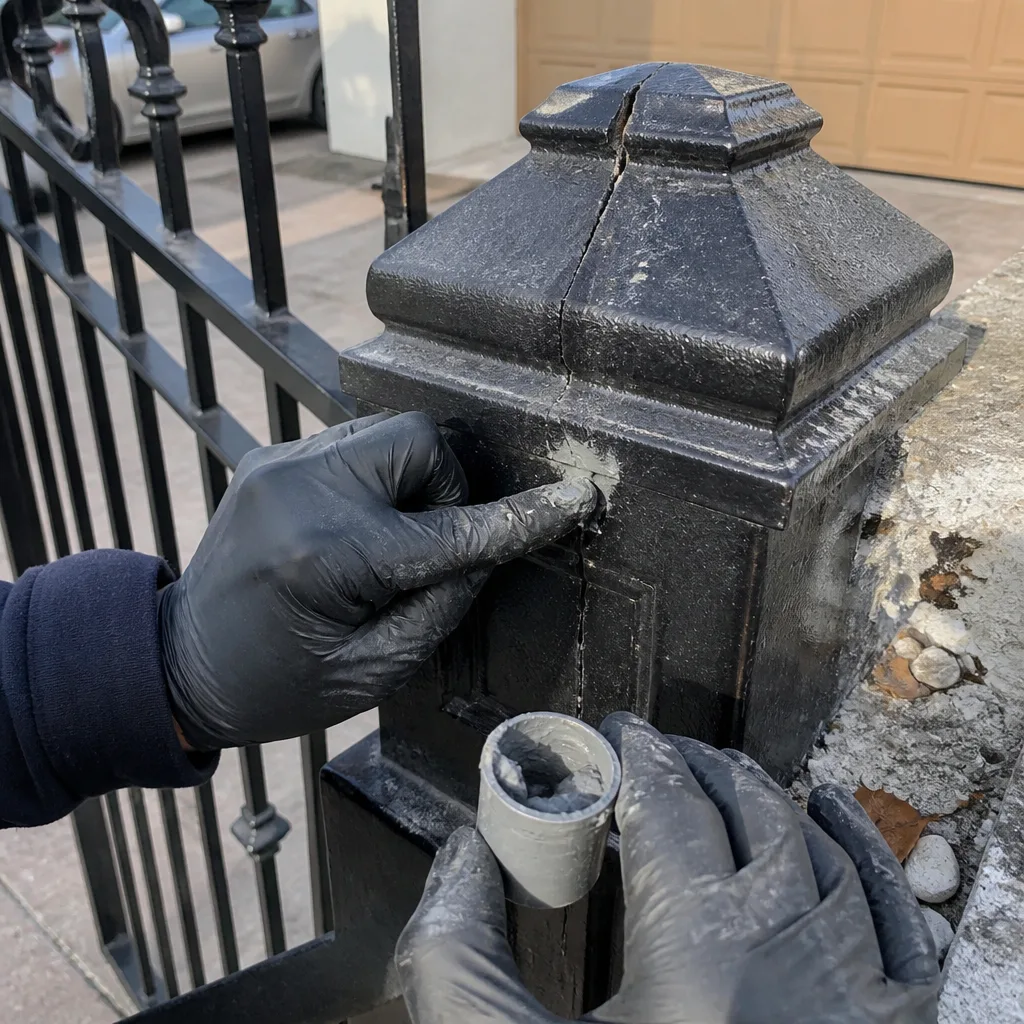
A gate that refuses to move at all is a straightforward diagnosis. Power is present or it isn’t. The board is getting signal or it isn’t. The motor spins or it doesn’t. An intermittent failure is different. The gate works every morning, then fails at 2 p.m. It opens fine for a week, then refuses for an afternoon, then works again. Most homeowners in Torrance procrastinate at this stage because the gate still opens most of the time. That’s exactly the wrong response. An intermittent failure is the most dangerous diagnostic state for three reasons:
- The failure pattern masks the root cause. A wire with cracked insulation may only short when moisture is present. A failing capacitor may only misbehave when the temperature crosses a threshold. A loose connection may only separate when the gate vibrates at a certain frequency. Each failure is a clue, but only if someone is watching for the pattern.
- Each failed cycle accelerates wear on other components. When a gate reverses unexpectedly, the motor stops and reverses under load. When a limit switch misfires, the operator runs the motor past the correct stopping point. Every abnormal cycle stresses the gear train, the hinges, and the motor windings. The intermittent failure is not just a symptom; it’s a source of additional damage.
- Intermittent failures tend to become permanent failures at the worst possible moment. A capacitor that’s temperature-sensitive fails for good on the hottest day of the year. A wire that shorts only when wet fails permanently during the first heavy rain. By the time the gate stops entirely, the failure has often progressed from a $200 component replacement to a $1,200 operator replacement.
The right response to intermittent behavior is documentation and prompt diagnosis. Note the time of day, the temperature, the humidity, and what the gate did. That record turns a frustrating mystery into a solvable problem. For more on how we diagnose motor and opener issues specifically, see our Gate Motor & Opener in Torrance page.
Worn vs. Failed: When a Component Can Be Serviced and When It Must Be Replaced
One of the most common questions we hear from Torrance homeowners is whether a repair will hold or whether they’re better off replacing the component. The answer comes down to the distinction between wear and failure. A worn component has degraded but still performs its function with reduced efficiency or increased noise. A failed component has stopped performing its function entirely or is unsafe to operate. Here’s how that distinction plays out across the components that matter most:
Hinges: Almost always serviced
Hinges wear through friction. The grease breaks down, the bearing surface roughens, and the gate gains resistance. A worn hinge can be removed, re-greased, and reinstalled if the wear hasn’t elongated the bolt holes or deformed the hinge knuckle. The replace threshold is structural: any visible crack in the hinge body, any elongated bolt hole that allows the gate to shift, or any deep pitting from rust that compromises the metal. Those are replacement situations.
Swing gate operators: Serviceable until the gear train or board fails
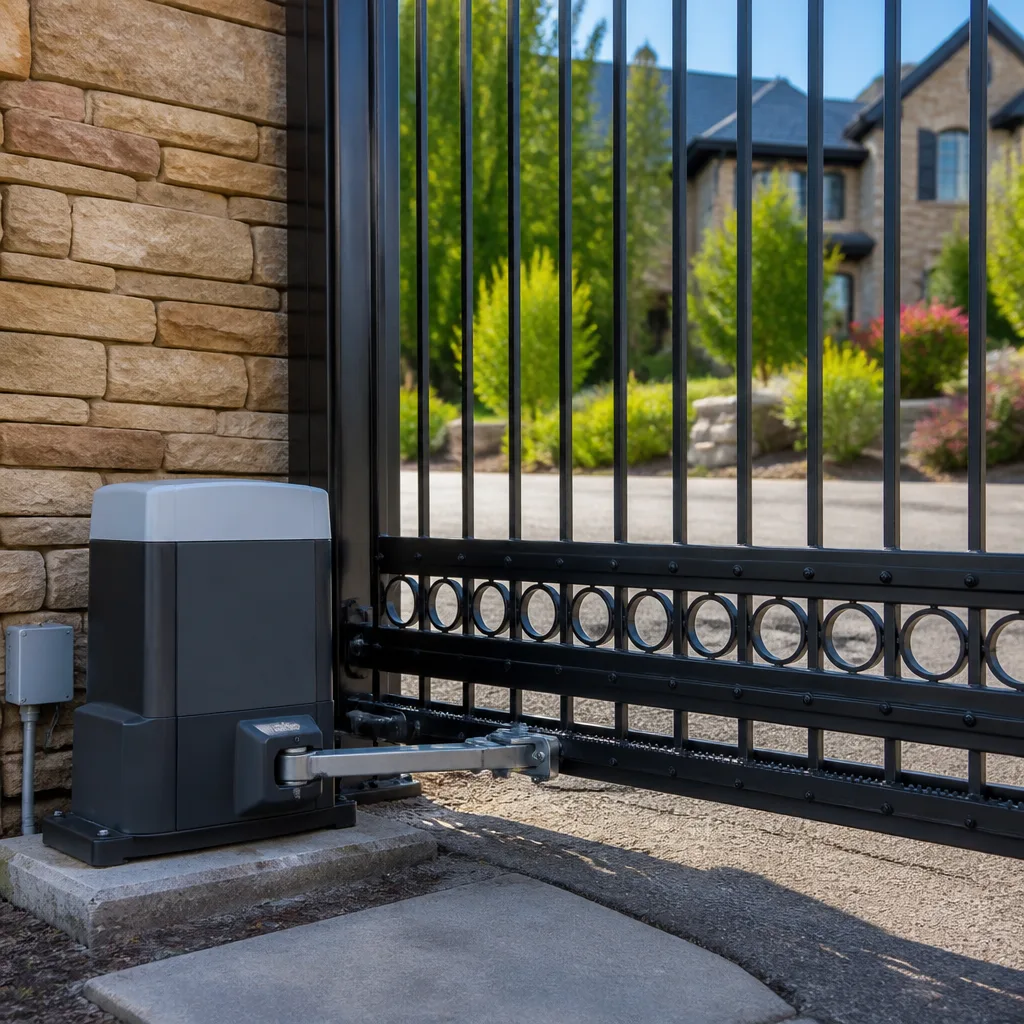
The operator contains several subcomponents. Capacitors, limit switches, and photo-eyes are serviceable items: they can be replaced individually without replacing the entire operator. The gear train is the boundary. If the gears are worn but not stripped, they can sometimes be re-greased and adjusted. If they’re stripped or cracked, the operator is done. The circuit board is the second boundary. A board with a failed relay can sometimes be repaired by a specialist. A board with burn marks or corrosion across multiple traces is a replacement. Brand matters here. We service Ghost Controls, DoorKing, Viking, Elite, and others, and parts availability varies by brand and model.
Slide gate rollers and track: Replace at the first sign of flat spots
Slide gate rollers are consumable items. They’re designed to be replaced. The service threshold is simple: if the roller still turns smoothly and the bearing feels tight, it can be cleaned and re-greased. If the roller has developed a flat spot, if it wobbles on its axle, or if the bearing feels gritty when turned by hand, replace it. A flat-spotted roller destroys the track, and a damaged track turns a $50 roller replacement into a $500 track repair.
Photo-eyes: Serviceable when dirty or misaligned, replace when the lens is clouded or the LED is dead
A photo-eye failure is often just dirt. We clean the lens, realign the beam, and the problem resolves. The replace threshold is visual: if the lens is permanently clouded from UV damage, if the internal LED no longer illuminates, or if the housing is cracked and water has entered, replace the unit.
The criteria above give you a framework for evaluating any technician’s recommendation. A legitimate technician will explain which side of the line your component falls on. If they can’t articulate the why, get a second opinion.
How to Document Warning Signs Before You Call a Technician
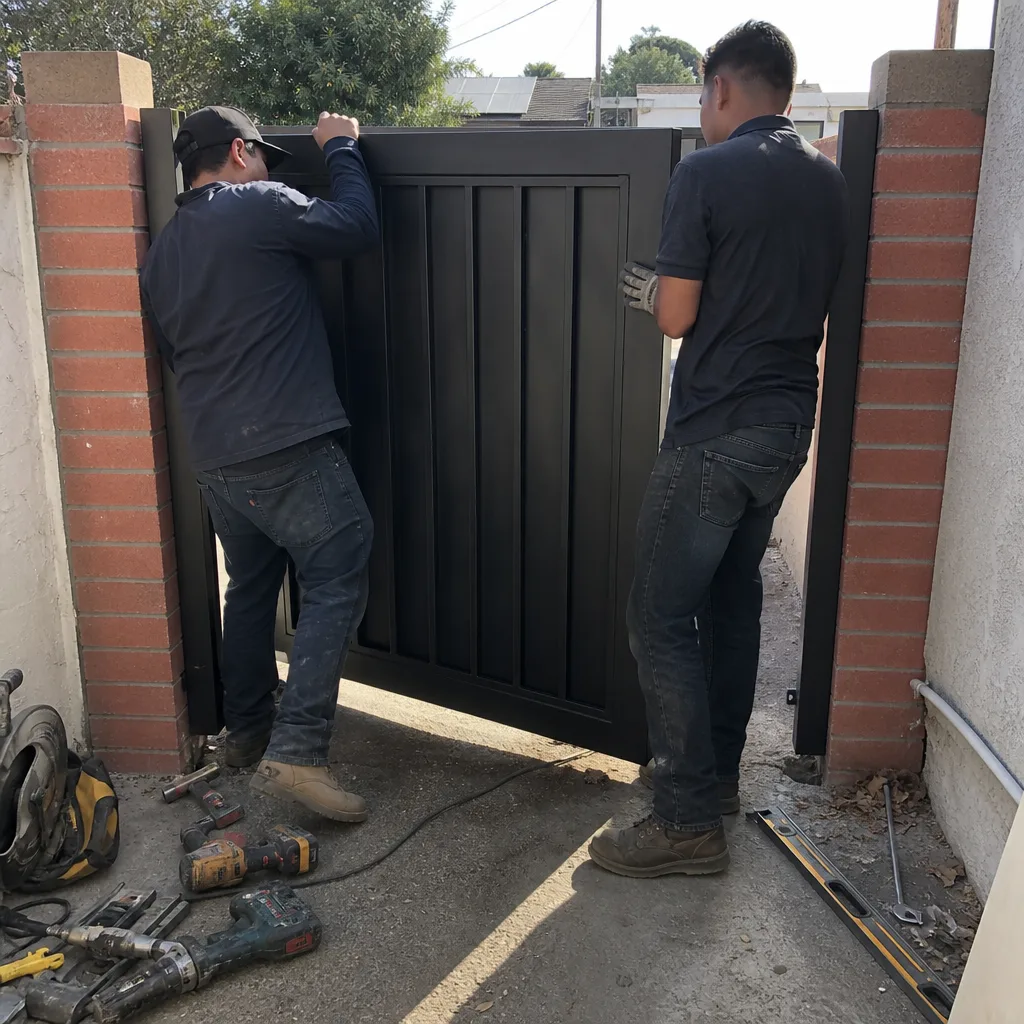
Your phone is the single most effective diagnostic tool you have before a technician arrives. A short video of the gate misbehaving, a photo of a cracked wire, a note about the time of day when the failure occurred: these details compress the diagnostic process and reduce the time we spend hunting for a problem that isn’t active at the moment we arrive. Here’s what to capture, step by step:
- Record a video of the gate in operation. Walk to the gate and record the full travel cycle from open to close, even if it’s working normally at the time. If it’s misbehaving, record the misbehavior. A 30-second video of a gate reversing at the halfway point is worth more than any verbal description.
- Photograph anything that looks wrong. A cracked wire, a rust spot, a sagging gate leaf, a concrete crack crossing the gate’s path. These photos give the technician the visual evidence you’re seeing, and they’re useful for comparing against the condition after the repair.
- Note the conditions when the failure occurred. Write down the time, the temperature, whether it had rained recently, whether the irrigation system had run. This pattern data is especially important for intermittent failures.
- Note what makes it work when it fails. Does pressing the remote repeatedly eventually work? Does the gate open manually but not via remote? Does it open after cooling down? Each of these recovery behaviors is a diagnostic clue.
- Have the documentation ready when you call. When you call Vance Gate Repair Torrance at (424) 373-8425, describe the behavior and mention that you have video and photos. This lets us dispatch the right technician with the right parts on the first trip.
Under The Haven Standard, every visit includes a documented photo record of what we found and what we did. Your pre-call documentation is the starting point for that record, and it ensures that no symptom goes uninvestigated. For a full explanation of how our repair process works from first call to final invoice, visit the Vance Gate Repair Torrance home page.
Torrance-Specific Factors That Accelerate Gate Wear
Torrance has a climate that’s harder on gate hardware than most homeowners realize. We’re close enough to the coast that marine air reaches most neighborhoods, carrying salt moisture that accelerates corrosion on steel components. We get enough sun that UV degradation is a real factor for wire insulation, plastic housings, and photo-eye lenses. And we get enough wind, particularly in the spring, that gate operators work against additional mechanical load on exposed properties. These factors combine to create predictable failure patterns we see across Torrance neighborhoods, from the Hillside areas to the flats near Western Avenue.
Marine air and corrosion
The salt content in Torrance’s air is lower than beachfront communities like Redondo Beach or Hermosa Beach, but it’s present throughout the city. Steel components rust faster here than they do inland. The hardware inside an operator housing is typically protected from direct exposure, but the housing itself can rust through at the bolt holes and seams over years. Galvanized and stainless hardware lasts longer but still degrades. When we open an operator housing in Torrance after five years, we expect to see some surface rust. The question is whether it’s reached the moving parts.
UV exposure and wire insulation
Low-voltage wire insulation is plastic, and plastic degrades under UV light. The wire runs that are exposed to direct sun, particularly along fence lines or where they exit conduit on the south and west sides of a property, crack and flake over time. Once the outer jacket is compromised, moisture enters, and the copper inside corrodes. This is the most common cause of intermittent low-voltage failures we see on gate systems throughout the South Bay.
Wind load on swing gates
Spring winds in Torrance are a real factor for swing gates. A solid-leaf gate acts as a sail, and the wind pushes against it with surprising force. The operator has to push back against that force every time it moves the gate in heavy wind. Over years, the additional load contributes to premature gear wear and capacitor stress. Properties near open areas, in the Hillside neighborhood, or on streets that run east-west experience this more than sheltered locations.
These environmental factors don’t mean you should expect your gate to fail. They mean the inspection schedule matters. A quarterly visual check, especially in the spring and fall, catches most of the Torrance-specific degradation before it becomes a repair.
Common Mistakes to Avoid
- Ignoring the warning signs because the gate still opens. An intermittent failure is a diagnostic opportunity, not a nuisance to tolerate. Every abnormal cycle adds mechanical stress that accelerates the eventual failure.
- Replacing the remote batteries repeatedly without checking the receiver. If new batteries don’t fix the remote lag, the problem is on the gate side. Continuing to replace batteries wastes money and delays the real repair.
- Lubricating hinges without cleaning them first. Adding grease on top of old, contaminated grease doesn’t help. The old lubricant has to be cleaned off before new grease goes on, or the abrasive particles stay in the joint.
- Ignoring surface rust inside the operator housing. Surface rust is cheap to address. Rust that’s spread to the gear train or the circuit board is a much more expensive problem.
- Adjusting the limit switches or force settings without understanding the entrapment protection system. These settings exist for safety. A gate that closes too hard or too far is a serious liability risk, and the settings should only be adjusted by a trained technician.
- Calling for service without documenting the failure pattern. A technician who arrives to find a gate that’s working normally has to rely on your description. Video and photo documentation turns that description into evidence.
- Accepting a verbal quote for a component replacement without a written scope. A legitimate repair company will put the price in writing before any work starts. If the quote only exists verbally, you have no protection against a surprise invoice.
When to Call a Professional
Some issues are safe to inspect yourself: a visual check for rust, a photo of a cracked wire, a note about when the failure occurred. But the moment the diagnosis points toward electrical work, high-tension components, or safety system adjustments, call a professional. Gate operators contain line-voltage electrical connections. Swing gates store mechanical energy in the hinges and the operator. Slide gates weigh hundreds of pounds and can cause serious injury if they derail. The entrapment protection systems that prevent injuries are calibrated to specific force and speed limits, and changing those settings without the right equipment defeats the safety purpose. Vance Gate Repair Torrance offers free estimates in Torrance - call (424) 373-8425. We’ll put the scope and price in writing before any work begins, and every visit includes a documented photo record of what we found and what we did.
Frequently Asked Questions
The most common gate repair issue we see in Torrance is wire insulation cracking at conduit entry points due to UV exposure and salt air, which causes intermittent shorts in low-voltage control wiring. Hinge wear on swing gates is a close second, especially on properties with solid-leaf gates exposed to spring winds. Call (424) 373-8425 for a written diagnosis and price before any work starts.
Most gate repairs in Torrance fall between $180 and $650 depending on the component: a photo-eye realignment or limit switch adjustment sits at the low end, while a receiver board replacement or a hinge rebuild lands at the higher end. Motor replacements for swing gates typically run between $850 and $1,600 depending on the brand. The exact price is always written down and handed to you before work begins.
Yes, for most mechanical and electrical repairs we can dispatch a technician the same day you call, and a live person answers the phone 24 hours a day at (424) 373-8425. Complex failures that require a non-stock part may need a follow-up visit, but the diagnosis and written quote happen on the first trip.
A gate that reverses for no reason is usually responding to its entrapment protection system: a misaligned photo-eye, a falsely triggered loop detector, or a limit switch set incorrectly. The gate is doing what it’s designed to do. The problem is the input telling it to reverse. This is a diagnostic issue, not a simple adjustment.
A gate needs replacement when the structural components fail: cracked hinge bodies, elongated bolt holes that allow movement, or rust that has compromised the frame. Worn hinges, failing capacitors, dirty photo-eyes, and loose connections are all repairable. A reputable technician will explain which side of the line your gate falls on, and the explanation should reference specific evidence you can see.
We service nine major gate automation brands including DoorKing, Viking, Ghost Controls, Elite, and more. Whatever motor is already on your property, we can likely work on it rather than steering you toward a replacement you don’t need. Every job includes a written price and a documented photo record under The Haven Standard.
The Bottom Line
Your gate tells you when it’s failing, but only if you know what to listen for and where to look. The behavioral signs, slow movement, random reversal, remote lag, are visible from the driveway. The visual signs, cracked wire insulation, rust inside the operator housing, loop wire surface breaks, require a flashlight and a quarterly habit of looking. In Torrance, where salt air and UV exposure accelerate degradation, that quarterly check is more than a good practice: it’s the difference between a $200 part replacement and a $1,500 operator replacement. Document what you find, get the price in writing before any work starts, and don’t tolerate a gate that sometimes works. For more guides & resources on gate maintenance, visit our blog. The failure it’s predicting is more expensive than the repair it’s asking for.
Written by Adrian Vance, Owner at Vance Gate Repair Torrance, serving Torrance since 2014.