
Last updated September 20, 2026
Free on-site gate assessment - hinges, posts, and your LiftMaster or Nice gate operator checked before anything is quoted
The assessment is free and the quote is the invoice.

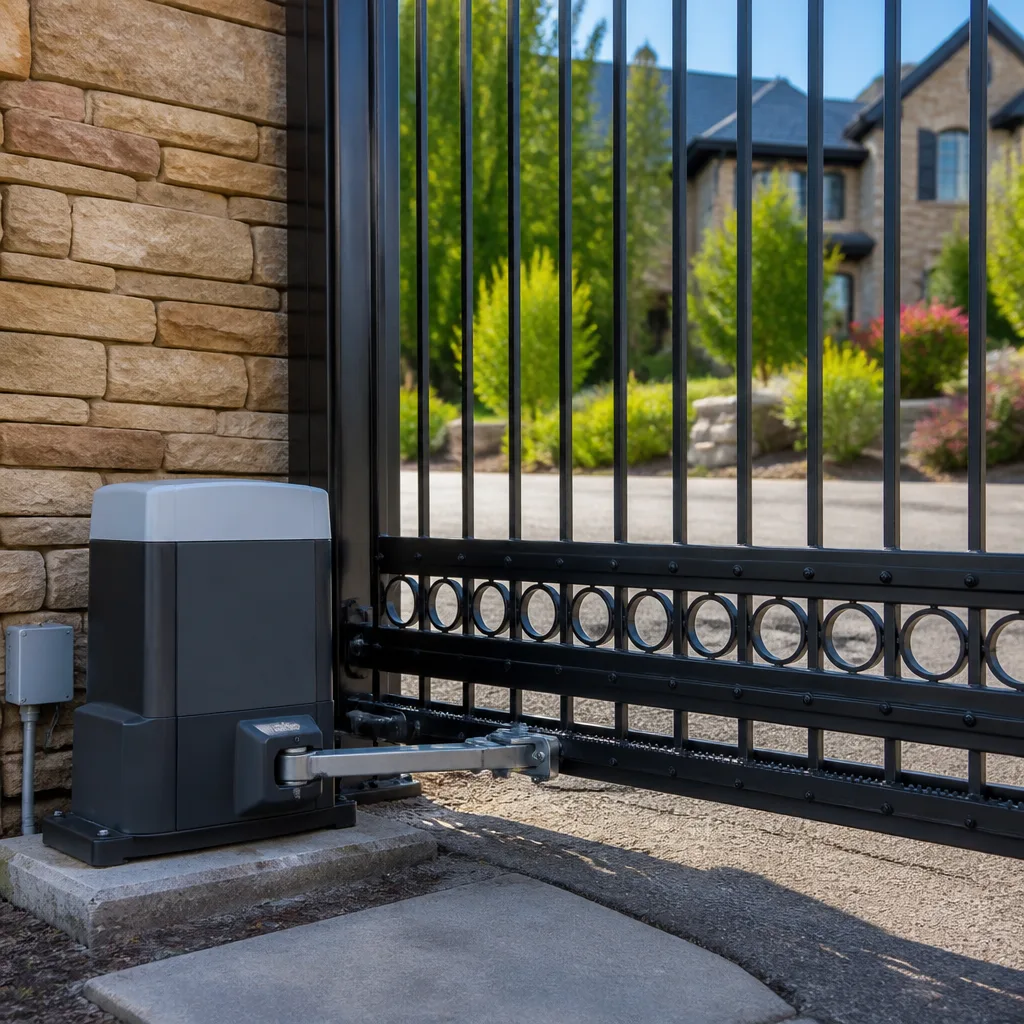
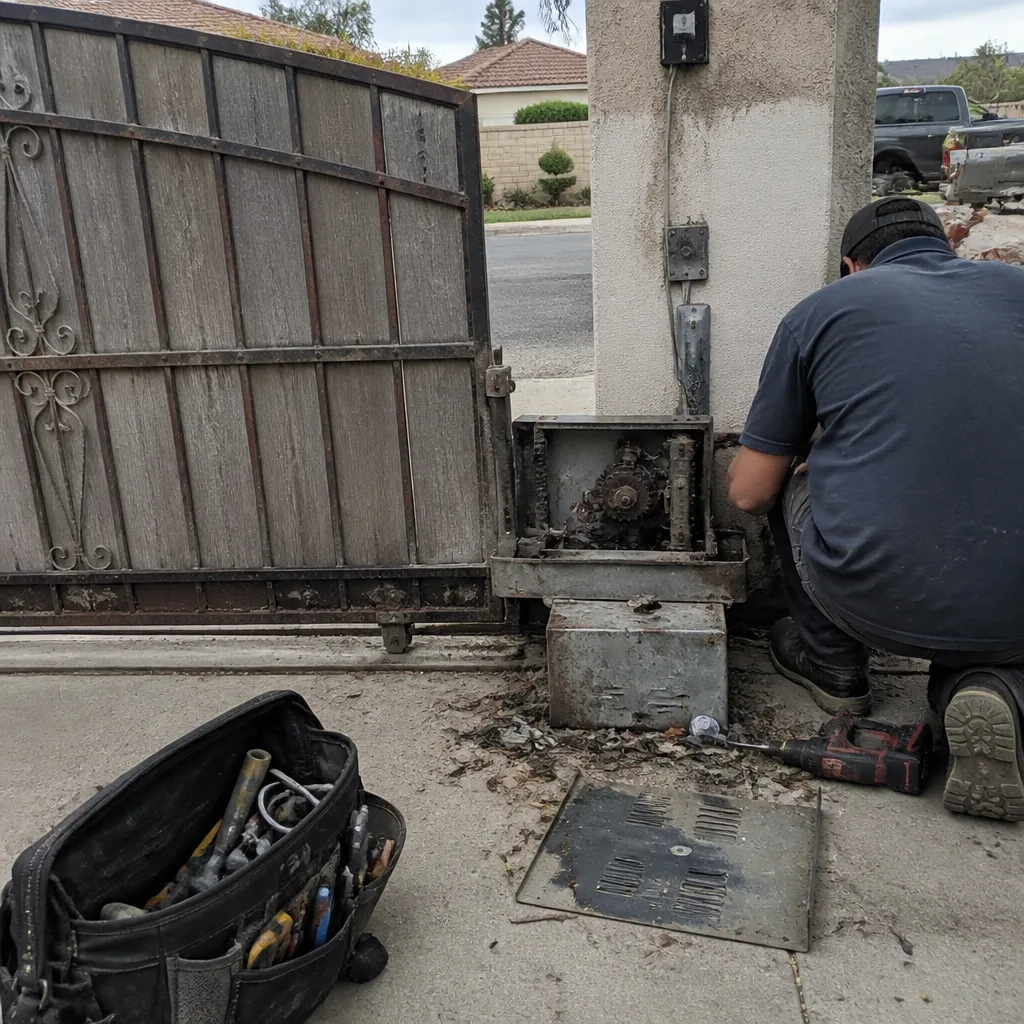 Before
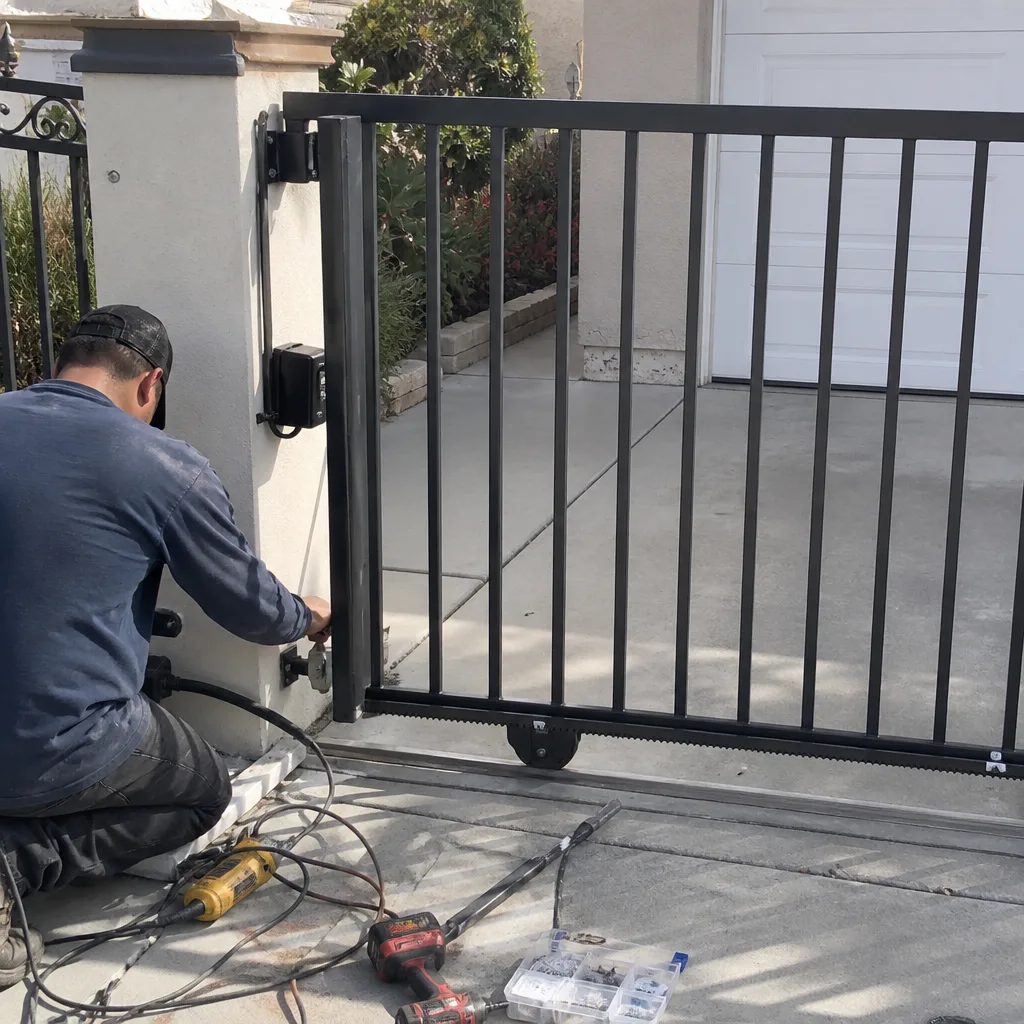 After
After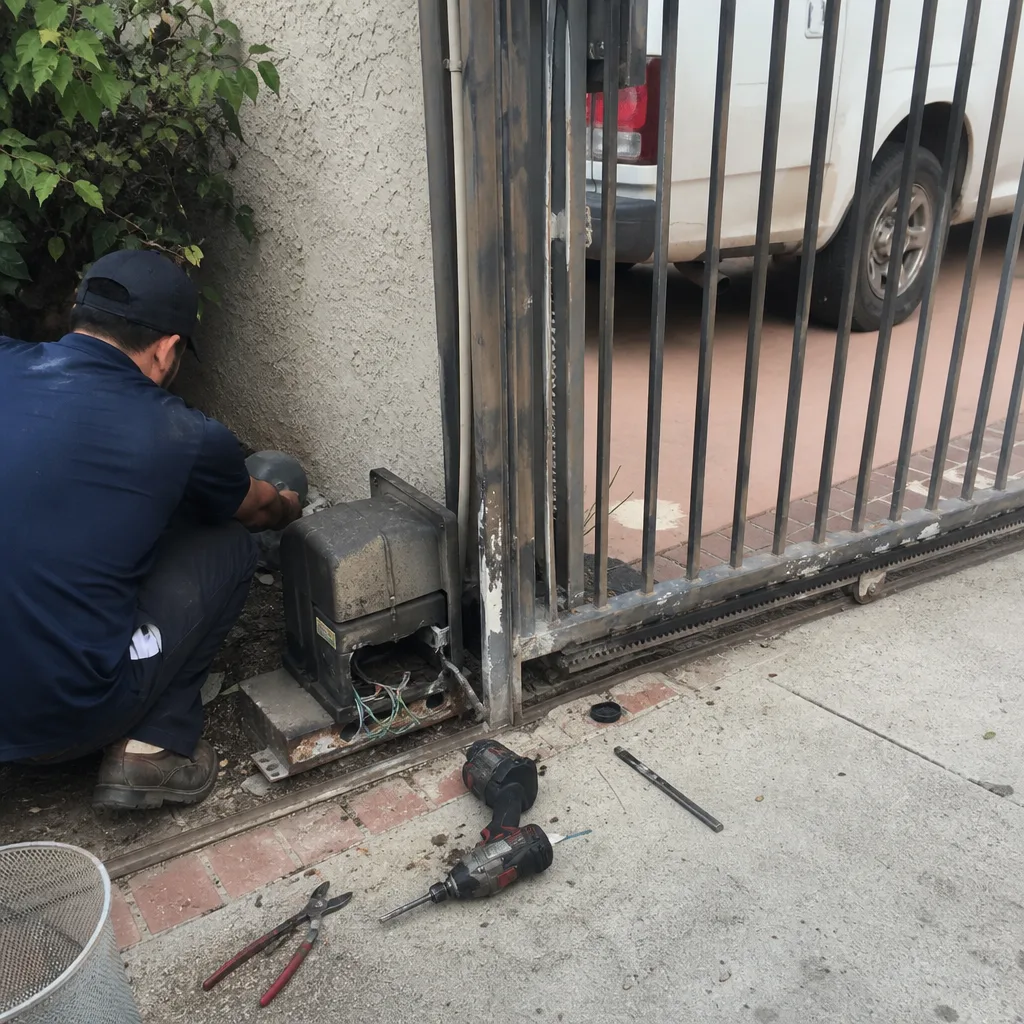 Before
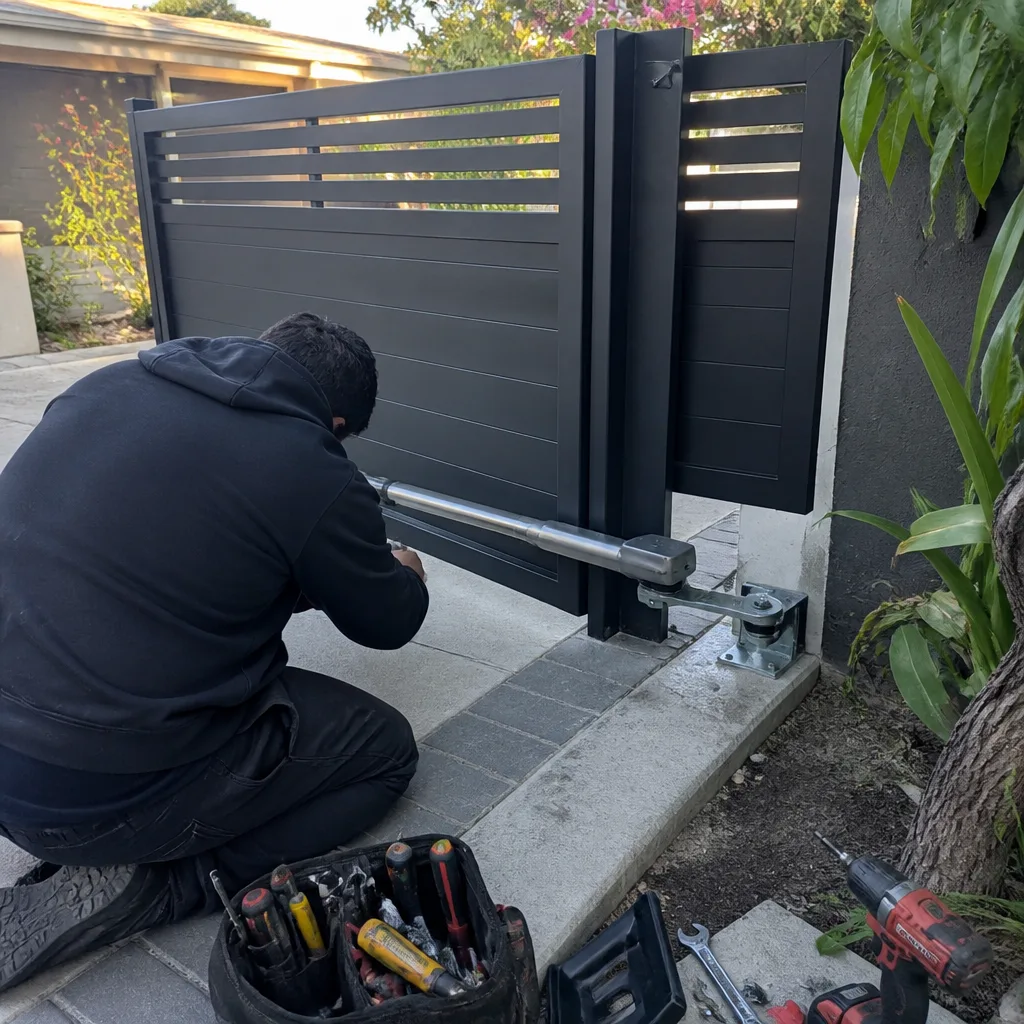 After
After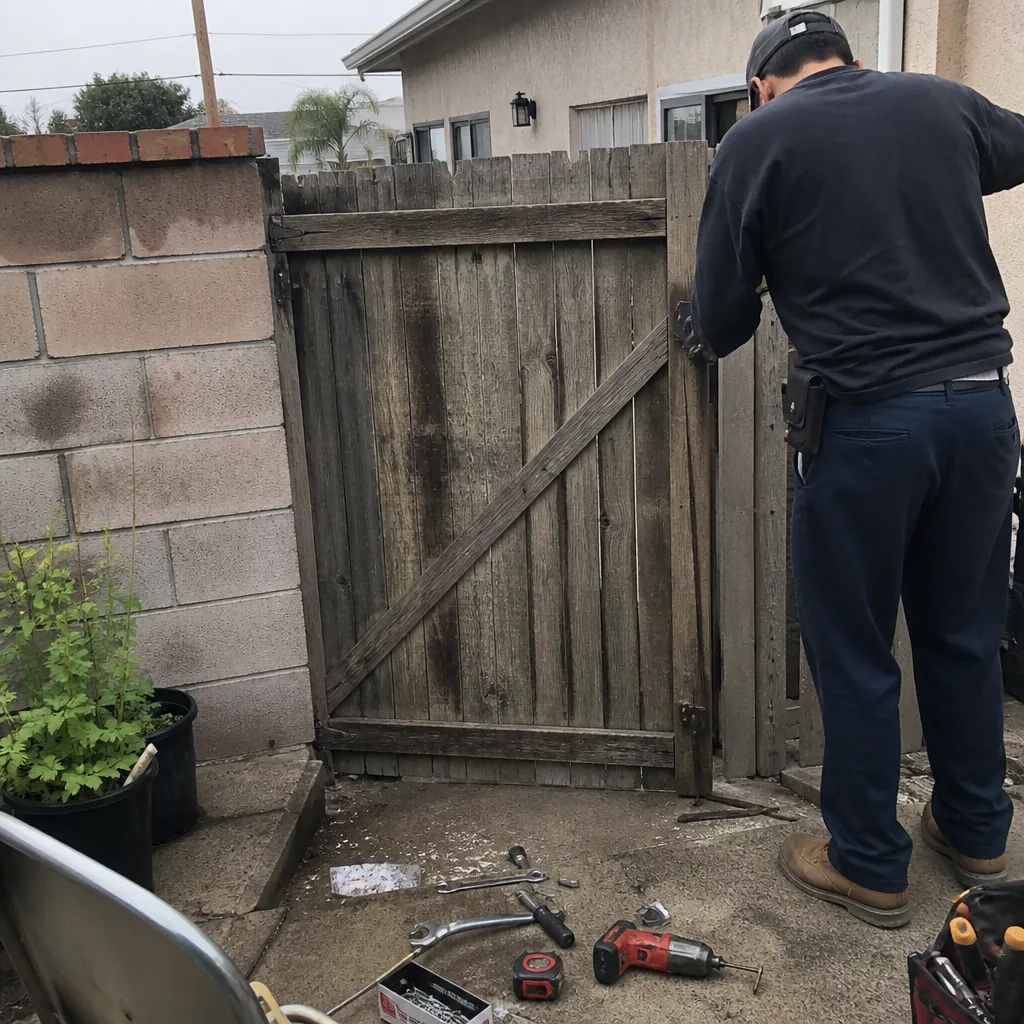 Before
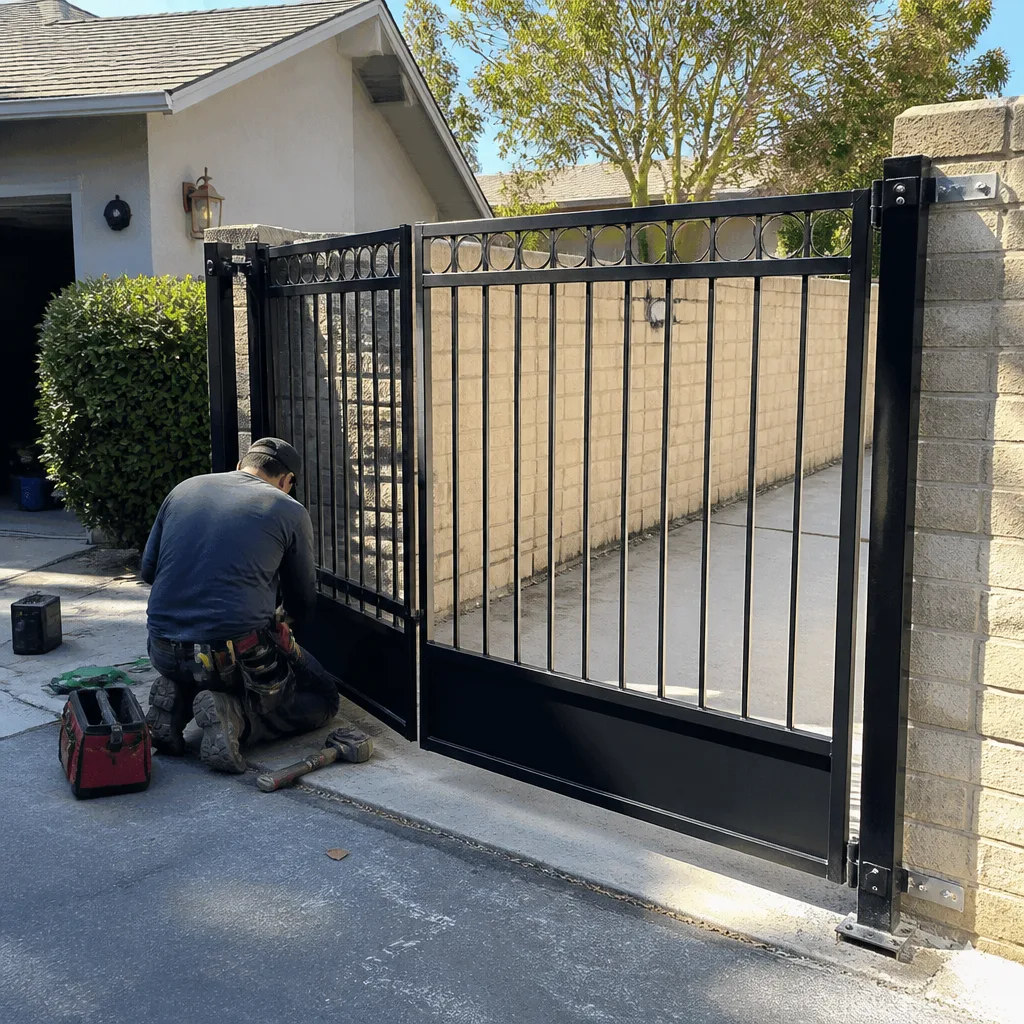 After
AfterGate Repair Maintenance Checklist for Torrance Homeowners
Most gate maintenance advice tells you to grease the hinges and look for rust. That’s like checking your car’s paint and calling it a tune-up. The truth is, the failures that strand you outside your own driveway at 7 a.m. are invisible: a limit switch that drifted four degrees, a battery that holds voltage until it’s asked to actually move the gate, a loop detector that never sees a motorcycle. In Torrance, where salt air from the Pacific compresses wear cycles and marine haze coats every exposed surface, the gap between “looks fine” and “is fine” is wider than most checklists admit. This guide closes that gap. You’ll learn what to check yourself, what numbers a technician should record, and why your maintenance log is worth more than any single Gate Repair services visit.
Quick Answer
A complete gate maintenance routine for Torrance homeowners goes beyond lubrication: you should test the obstruction sensors and battery backup every 30 to 60 days, inspect hinges and limit switches every 6 months due to salt air, and have a technician record voltage and limit-switch readings annually. For Gate Repair Warning Signs: A Torrance Homeowner’s Reference Guide, see our dedicated resource. The checklist below divides those tasks into what you can safely do yourself and what requires a meter, a service record, and documentation.
Table of Contents
- What You Can Check Yourself (Visual and Manual Tests)
- The Readings That Matter More Than a Verbal “Looks Good”
- Torrance Salt Air: Why a 12-Month Cycle Drops to 6 for Some Components
- How to Keep a Gate Log That Saves You Money
- The Three Components Most Torrance Homeowners Never Check
- A Seasonal Maintenance Checklist for Torrance Driveway Gates
- Common Mistakes to Avoid
- When to Call a Professional
- Frequently Asked Questions
- The Bottom Line
BeforeAfterWhat You Can Check Yourself (Visual and Manual Tests)
The homeowner-level checklist has two jobs: catch the obvious before it becomes expensive, and know when to stop and call someone. Neither requires a meter. Both require about fifteen minutes a month.
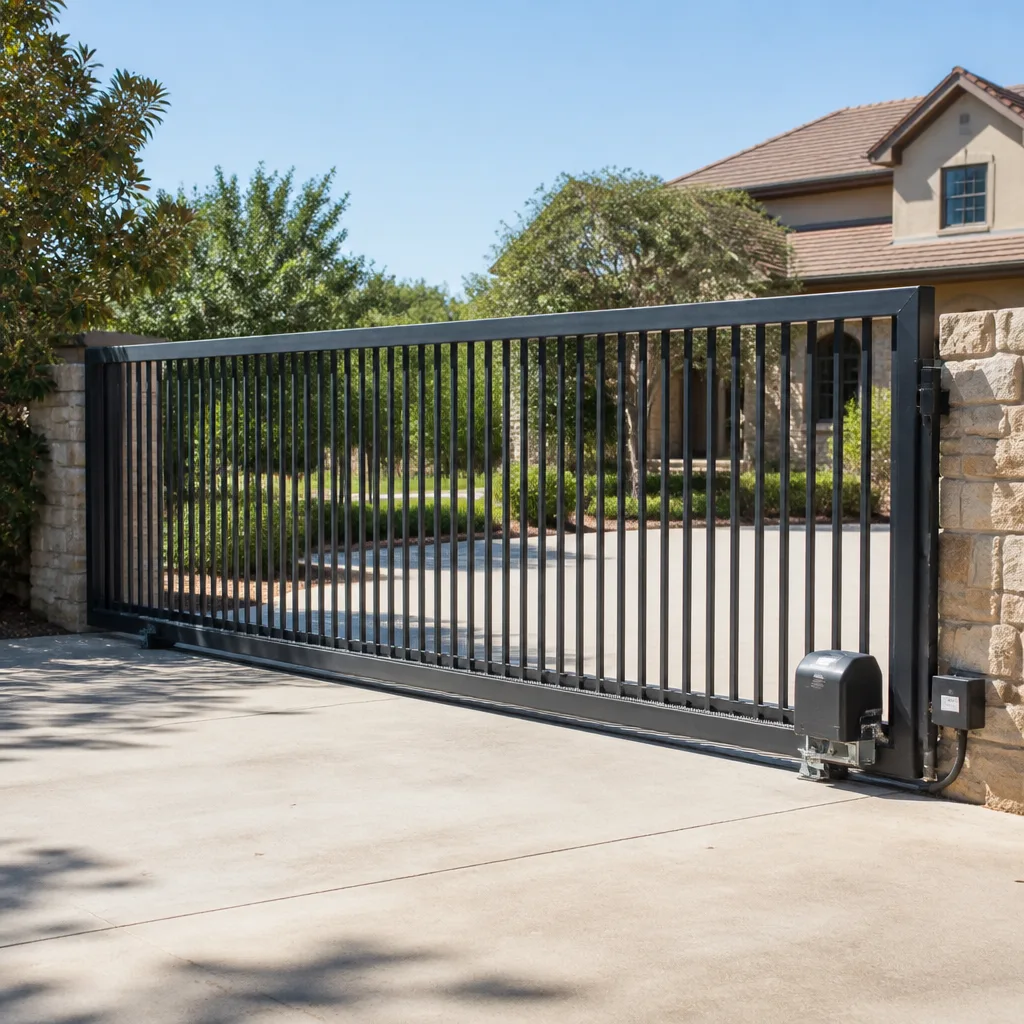
Start with the wheels and track, if your gate is a sliding model. South Torrance and the areas around Rolling Hills see fine dust and salt film accumulate in the track bed. Run your finger along the rail. If you pick up grit, that same grit is acting like sandpaper on the wheel bearings. A dry wipe and a light silicone spray in the rail is enough. Do not use grease on a track; it holds the grit and makes things worse.
For a swing gate, put your hand on the hinge bolts every 60 days. A quarter-turn of movement in any direction means the hinge is working loose. A loose hinge changes the gate’s angle of travel, which changes the load on the motor, which shortens the motor’s life. Tightening a hinge bolt takes two minutes. Replacing a fried motor takes an afternoon and somewhere between $600 and $1,600.
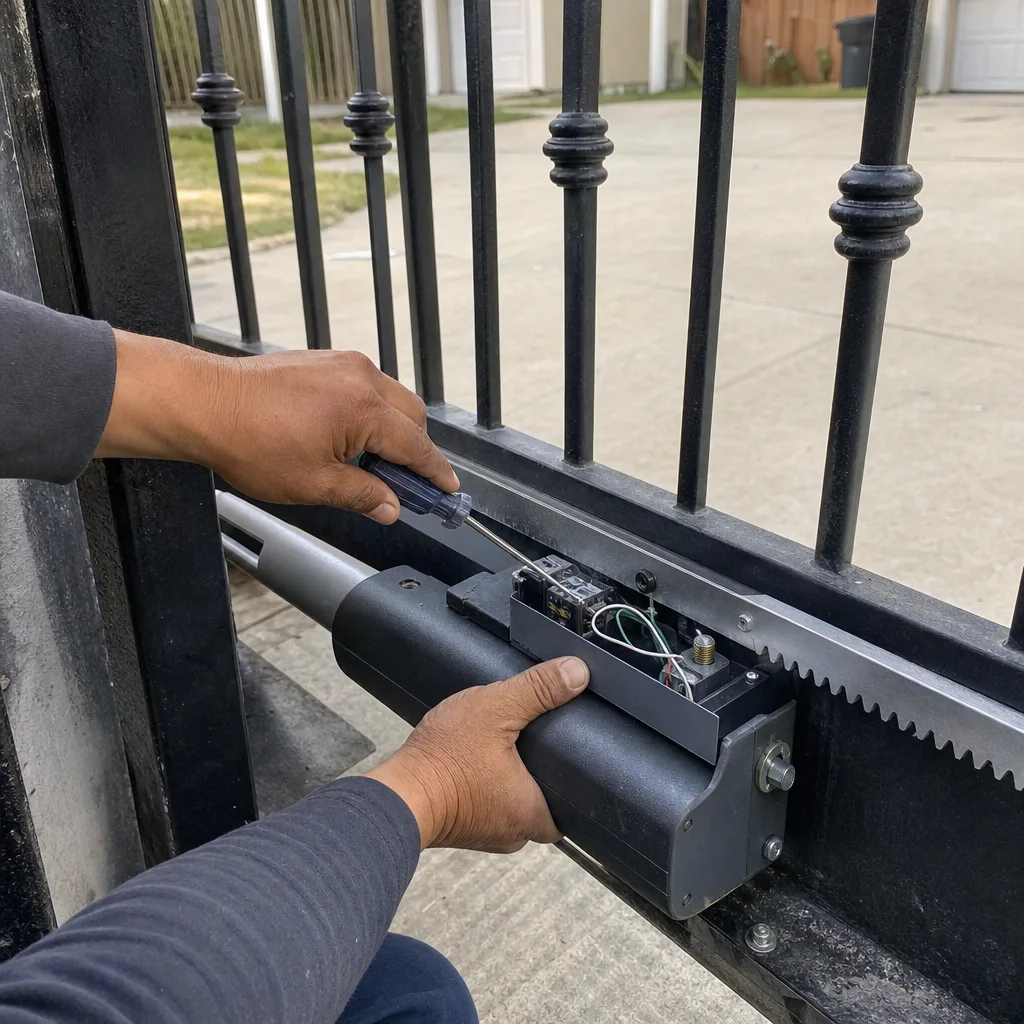
Then run the manual force test. Disengage the operator (every motor has a release mechanism; if you don’t know where yours is, that’s item one for your technician) and swing or slide the gate by hand. It should move smoothly with one hand. If it doesn’t, something is binding. The motor has been masking that binding with extra force. Every day the motor works against resistance, it runs hotter, and eventually it fails at the worst possible time.
Finally, test the remote’s range from the street. Stand where you’d normally stop your car and press the button. If the gate opens slower than it did a month ago, or if you need to be closer, that’s data. Write it in your log. Motors don’t fail suddenly; they fail gradually, leaving bread crumbs for anyone paying attention.
The Readings That Matter More Than a Verbal “Looks Good”
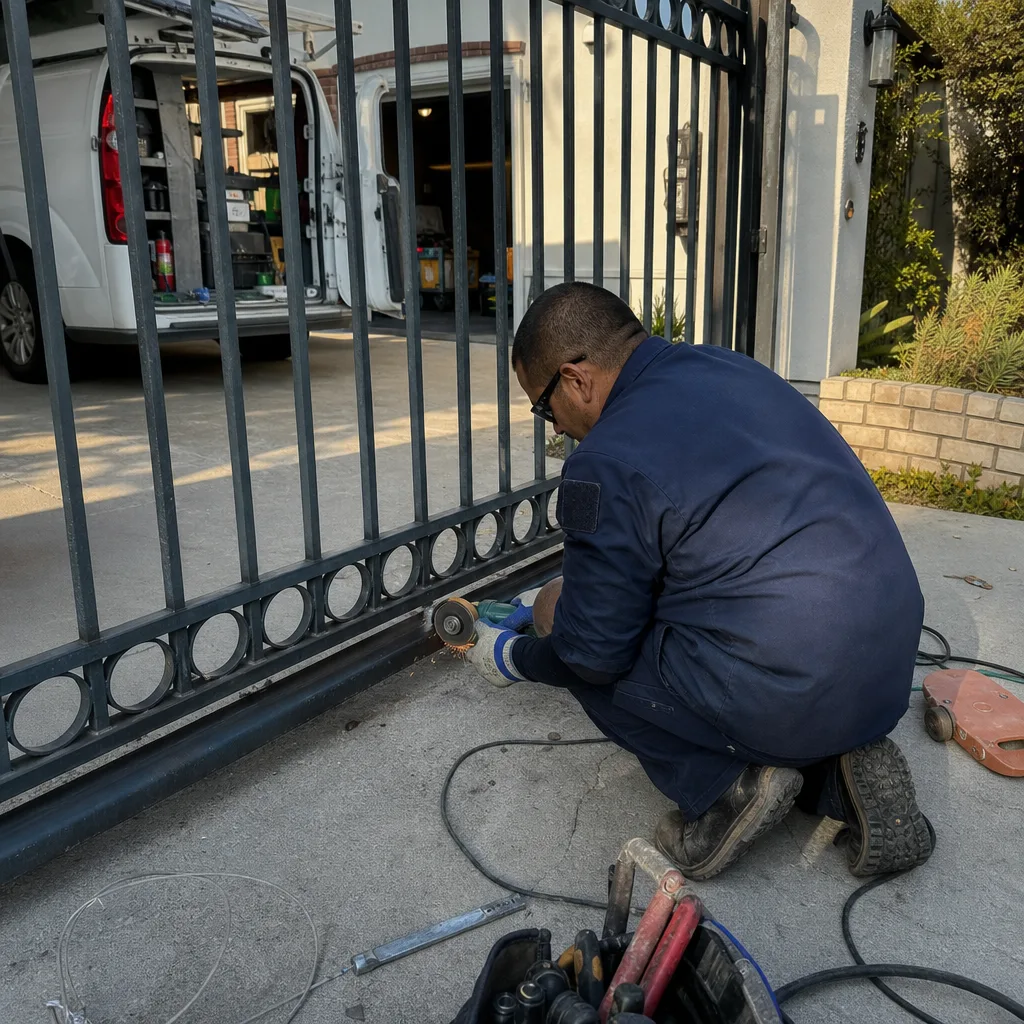
Here’s where most maintenance visits fail the homeowner. A technician spends an hour at the gate, greases a few fittings, and tells you everything’s fine. What did he measure? Nothing. “Looks good” is a vibe, not a finding.
A proper maintenance visit produces numbers. Those numbers get written down. And here’s why that matters for your wallet: when your gate breaks nine months later, the next technician doesn’t start from zero. He starts from a record of what the readings were when the gate was healthy. That cuts diagnostic time by half or more, which means a smaller bill.
The readings that matter on every visit:
- Battery voltage under load. A battery can read 13.8 volts at rest and drop to 9 volts the instant it’s asked to lift the gate. A load test tells you whether the battery is still a battery or just a decoration. In coastal Torrance, batteries die faster than inland. Salt air accelerates corrosion on terminals. Test them; don’t trust them.
- Limit-switch position. The limit switch tells the motor when to stop. Over months, vibration and thermal shift move it. A switch set 12 degrees past travel means the motor is working against its own frame every cycle. Record the setting, adjust if needed, photograph the new position.
- Loop detector sensitivity. The loop under your driveway detects the metal mass of a car. Set too low, and a motorcycle or a small car won’t trip it. Set too high, and the gate opens for a bicycle or a stray shopping cart. The correct setting depends on what vehicles actually use the driveway. Record it.
- Photo-eye alignment. The photo-eye (the infrared beam that stops the gate if something crosses the path) drifts. Two degrees of misalignment on a foggy Torrance morning, and the gate refuses to close because the beam is scattered by moisture. A technician should verify the beam path and record the alignment in degrees or distance from center.
- Drive-chain or belt tension. For sliding gates with chain drives, a chain that’s too loose skips, and a chain that’s too tight wears the sprocket. The correct tension is measurable. It should be recorded at each visit so wear across months is visible.
Vance Gate Repair Torrance leaves a written record of every one of these readings on every visit. That record is yours, and it means the next visit starts from data, not a guess. That’s the same habit Adrian Vance built in commercial access control starting in 2014: if you didn’t document it, you didn’t do it.
Torrance Salt Air: Why a 12-Month Cycle Drops to 6 for Some Components
Standard maintenance literature says “annual service.” That’s written for inland climates, where the air is dry and the gate’s enemies are heat and dust. Torrance is different. The prevailing onshore flow brings marine air inland past Walteria, past Old Torrance, up into the South Bay. That air carries salt, and salt does two things: it corrodes exposed metal and it creates a conductive film on electrical contacts.
What that means for your gate schedule:
- Every 30 to 60 days: Wipe down exposed metal with fresh water. Check photo-eye lenses for salt haze. Test the obstruction reversal.
- Every 6 months: Inspect and lubricate hinges, bolts, chains, and wheels. Salt air shortens the lubrication cycle; a hinge greased in June is dry by November. Check terminal connections for corrosion bloom. Disconnect and reconnect, sand lightly if needed.
- Every 12 months: Full service visit with documented readings. Battery load test, limit-switch position check, loop detector sensitivity verification, belt or chain tension, full system cycle test.
- Every 24 months, or sooner if readings drift: Battery replacement in many coastal installations. We’ve replaced two-year-old batteries in Torrance that looked fine on a voltmeter and collapsed under load. The marine environment is not kind to sealed lead-acid cells.
If your home is west of Hawthorne Boulevard, the salt exposure is heavier. If you’re further east toward the 110, the effect is moderated. But “moderated” is not “absent.” The marine layer doesn’t respect neighborhood boundaries.
Use a silicone or lithium-based lubricant on hinges and a dry-film spray on electrical contacts; wet lubricants attract dust, and dust plus salt equals a grinding paste.
How to Keep a Gate Log That Saves You Money
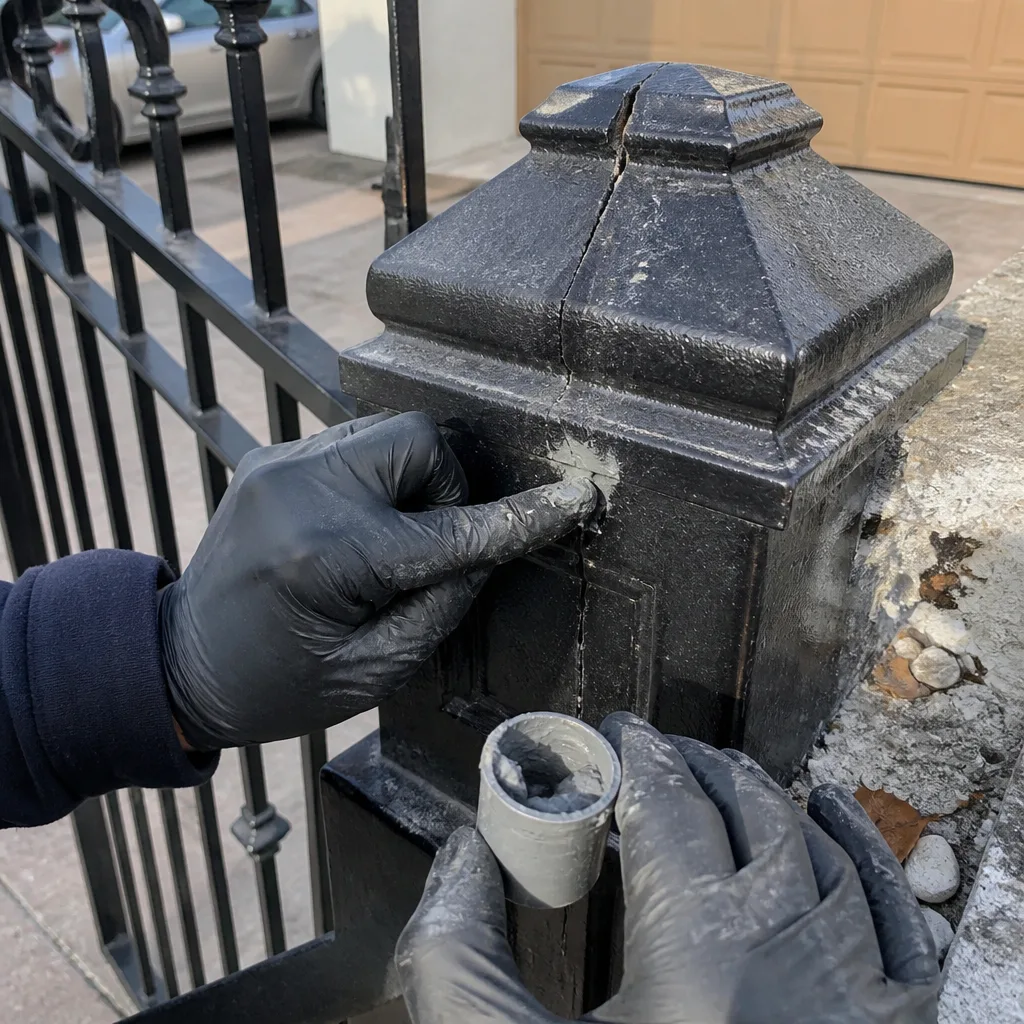
A gate log is the cheapest maintenance tool you’ll ever use, because it turns future service calls from forensic investigations into simple repairs. Every time something happens to your gate, write it down. Every time someone works on it, insist on a receipt with the part number and the setting values. Every time you notice a change, log it.
What goes in the log:
- Date and description of any anomaly. “Opener beeps twice and reverses” or “gate squeals when opening from full closed.”
- Weather conditions, if the anomaly only happens in rain or fog. This is Torrance-specific; the marine layer affects photo-eyes. “Fails to close on foggy mornings” is a diagnostic clue.
- Any maintenance performed. What was done, by whom, what was replaced. Include part numbers and brand names.
- Readings from professional visits. If your technician recorded battery voltage or limit-switch position, those numbers belong in your log, with the date.
- When the last professional visit occurred. This is how you stay ahead of the 6-month coastal cycle.
When you call a gate repair service in Torrance, you can say, “Here’s what I’ve observed, here’s what was done in the last year, here’s what the readings were.” That conversation takes three minutes instead of thirty. The technician arrives with a working hypothesis instead of a blank page. Diagnostics go faster. The bill is smaller. This is how the commercial world operates, and there’s no reason your driveway gate shouldn’t get the same treatment. Our Vance Gate Repair Torrance home page includes a record of what a full-service documentation package includes.
The Three Components Most Torrance Homeowners Never Check
After 22,000-plus gates repaired and installed since 2014, three components stand out as the most common non-emergency service calls, and almost none of them show up on generic maintenance checklists.
The battery backup, specifically under load. This tops the list. The battery sits in the control box, ignored, for years. It passes a surface voltage check. It fails the moment the power goes out and the gate has to actually open on battery power alone. In Torrance’s marine air, terminal corrosion compounds the issue. If you don’t know when your battery was last load-tested, it’s overdue.
The loop detector sensitivity setting. Most homeowners don’t know the loop exists. It’s the wire buried in the driveway that detects vehicles. If it’s not tuned for the vehicles you drive, you get a gate that opens for the neighbor’s truck but not your sedan, or one that cycles open randomly. This is not broken wiring; it’s a setting. It takes five minutes to adjust, and it resets the reliability of the whole system.
The photo-eye alignment and lens condition. Again, it works until it doesn’t. Misalignment happens gradually, through vibration, wind, or a bump from a car. Lens haze comes from salt and road film. The eye is usually blamed for the failure, but the actual issue is alignment or opacity, both of which are correctable in minutes. Our Gate Repair in Torrance page details typical misalignment symptoms.
A maintenance routine that misses these three components is checking the paint while the engine has no oil. The gate will fail; you just won’t see it coming.
A Seasonal Maintenance Checklist for Torrance Driveway Gates
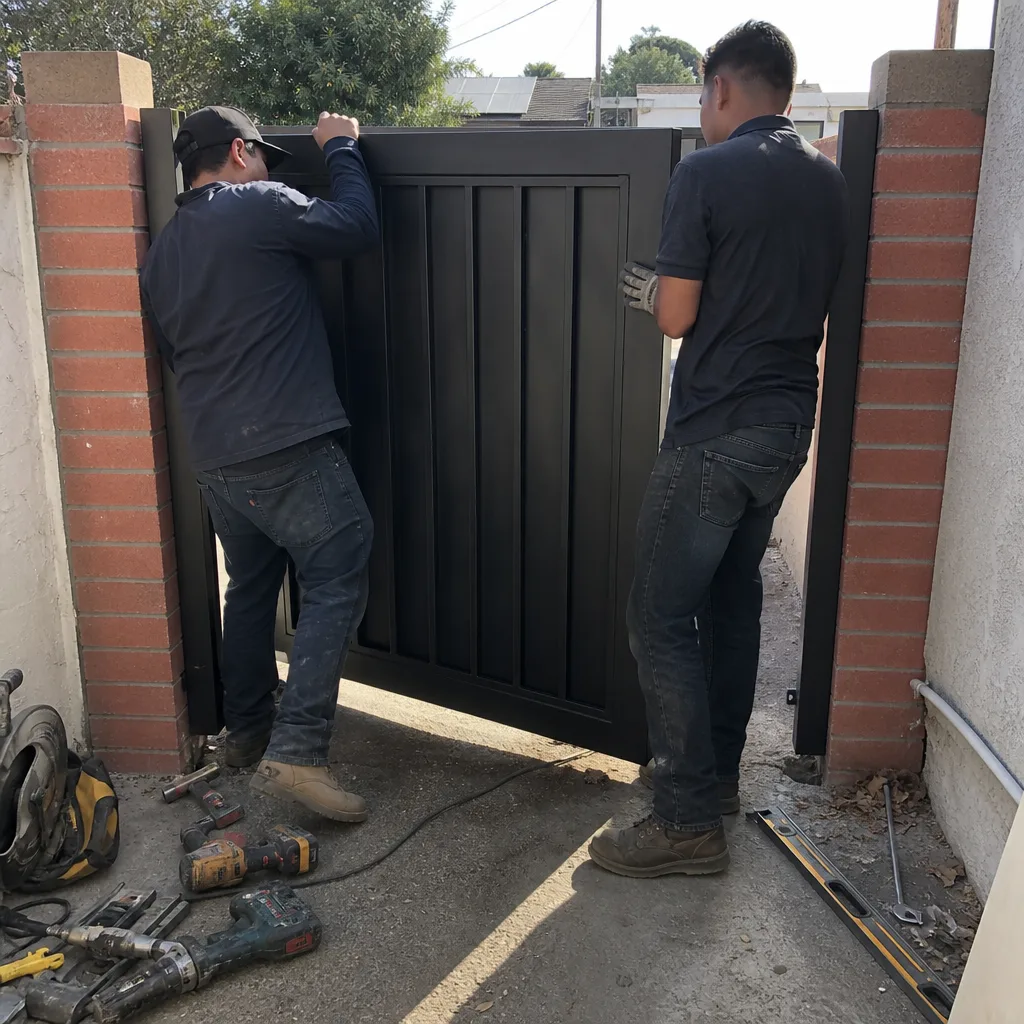
Torrance doesn’t have dramatic seasons, but it has a marine layer season (May through August) and a rain season (November through March, light but persistent). The seasonal shifts affect your gate in specific ways.
Late spring, before the marine layer settles in:
- Clean photo-eye lenses and verify beam alignment. Fog and low cloud scatter the beam; a barely-functional alignment in April is a refusal-to-close in June.
- Check battery terminals for corrosion. The first warm, humid weeks accelerate oxidation on exposed copper.
- Run the obstruction test three times, from both directions, watching for hesitation or slow reversal.
Late autumn, before the rain returns:
- Inspect the control box seal and weep holes. A control box that breathes water will eventually short the board.
- Lubricate all hinges, chains, rollers, and pivot points with a dry-film or silicone lubricant.
- Confirm that the gate drains properly; standing water at the base of a swing gate post leads to post rot over years.
- Test the manual release. You want to know, before a storm hits at night, that you can release the gate by hand.
If you’re planning a full maintenance visit this year, our Gate Installation in Torrance page covers the documentation we leave behind after any install or major repair, and our technicians apply the same standard to every maintenance visit.
Common Mistakes to Avoid
- Greasing the track. On sliding gates, grease on the rail holds dirt and grit and turns the track into a grinding surface. Use only a light dry-film lubricant, and wipe the rail clean first.
- Ignoring the manual release because you don’t know where it is. If you can’t disengage the gate when the power fails, you’re locked in or out. Learn the release mechanism and test it every six months.
- Assuming the battery is fine because the gate still works on mains power. The battery doesn’t show its condition until it’s asked to work. Load-test it annually, more often near the coast.
- Forcing the gate when it resists. If the gate hesitates, pumps, or reverses, something is wrong. Run it through repeated cycles and observe before calling.
- Replacing the remote control without testing it first. Weak remote signal often isn’t the remote; it’s a bad receiver or a misaligned antenna. Test with fresh batteries before concluding the remote is dead.
- Lubricating the motor. Motors are sealed. Opening them to add oil voids warranties and lets moisture in. Lubricate the moving parts: hinges, chains, rollers, pivots. Leave the motor alone.
- Treating “annual service” as sufficient for a coastal property. Salt air shortens cycles. A gate that would pass an annual check in Pasadena may fail a 6-month check in Torrance.
When to Call a Professional
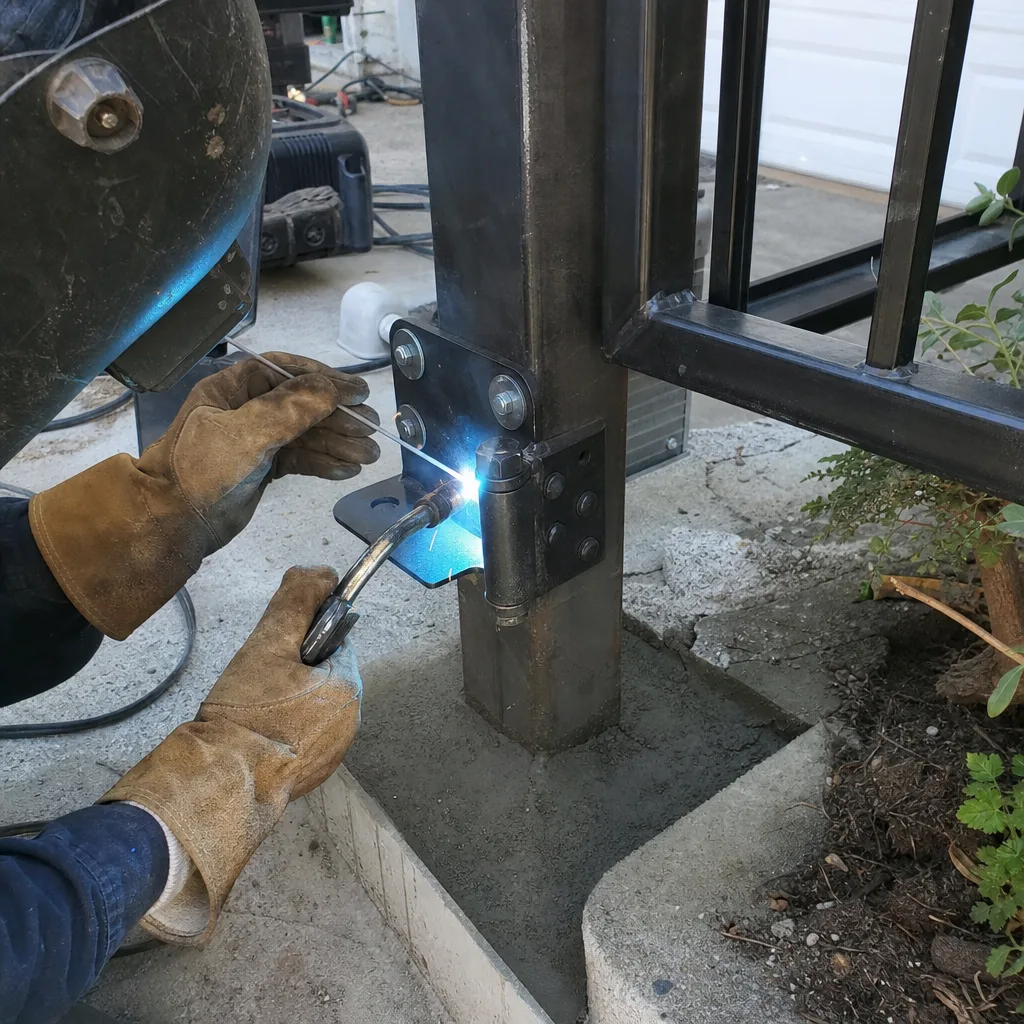
Some things are outside the homeowner’s checklist, and that’s not a criticism; it’s a boundary. If your gate trips a breaker repeatedly, the issue is either a shorted motor or a wiring fault, and both require a meter and experience. If the gate moves but sounds like metal grinding on metal, a bearing or gear has failed. If the opener clicks and the gate doesn’t move, the capacitor or motor is finished. If the safety reversal repeatedly fails your test, you have a liability problem, not a maintenance problem. For any of these, call a qualified technician. Vance Gate Repair Torrance handles Gate Motor & Opener service on nine major brands, including LiftMaster, DoorKing, Elite, and Mighty Mule. We offer free estimates in Torrance, with a written price before any work begins. Call (424) 373-8425 for a visit. Torrance homeowners get a documented record of what we find, what we set, and what we replace before we leave the property.
Frequently Asked Questions
Due to salt air and marine haze, Torrance gates should be serviced every 6 months for lubrication and component inspection, with documented electrical readings taken at least once per year. Homes west of Hawthorne Boulevard should consider the 6-month interval mandatory, as coastal exposure accelerates corrosion. For your specific setup, call (424) 373-8425 and we’ll give you a written maintenance schedule based on your gate type and motor brand.
The most common non-emergency repair call we see in Torrance is a gate that won’t close on foggy or damp mornings. The cause is usually photo-eye misalignment or lens haze from salt film. Cleaning the lenses and verifying alignment fixes most cases in under half an hour.
You can and should handle the visual and manual checks: hinge tightness, track cleanliness, remote range, and the monthly obstruction test. What you cannot do without a meter and training is load-test a battery, read limit-switch positions, or verify loop detector sensitivity. A mixed approach works best: your monthly and seasonal checks, and a professional visit every 6 to 12 months for the documented readings and adjustments.
A well-maintained gate motor in Torrance typically lasts 8 to 12 years, while an ignored one often fails in 5 to 6. The difference is almost entirely maintenance: load-tested batteries, clean terminals, correct limit-switch settings, and lubricated chains and hinges. The motor itself is not the weak point; the components around it are.
A proper maintenance visit includes battery voltage under load, limit-switch position verification, photo-eye alignment, loop detector sensitivity testing, chain or belt tension check, terminal cleaning, and a full system cycle test. After the visit, you should receive a written record of every reading and adjustment. If you don’t, ask for one. At Vance Gate Repair Torrance, the written record is standard practice, not an upsell.
Gate maintenance visits in Torrance typically run between $95 and $250, depending on the gate type, motor brand, and whether any components need replacement. Brands like LiftMaster, DoorKing, and Mighty Mule have different parts pricing. A full battery replacement adds to the bill. Call (424) 373-8425 for a written estimate; the price is quoted and agreed before any work starts, and you keep the written record.
The Bottom Line
A maintenance checklist that only covers greasing and visual checks is incomplete. The expensive failures are electrical, not mechanical, and they are invisible to the naked eye. In Torrance’s salt air, the schedule compresses: 6 months for lubrication and inspection, 12 months for documented readings, 24 months for battery replacement, and monthly for obstruction tests. Keep a log. Record the numbers. Insist on written evidence of every professional visit. When the gate has a real problem, call a professional who leaves documentation. Explore our more guides & resources to stay ahead of issues. Vance Gate Repair Torrance has been doing exactly that since 2014.
Written by Adrian Vance, Owner at Vance Gate Repair Torrance, serving Torrance since 2014.